The curcumin industry generally classifies curcumin into four main categories: natural raw extracts, chemical monomers, modified solubilizing delivery systems, and metabolic derivatives. The market often uses the term "curcumin" interchangeably with turmeric powder, turmeric oil resin, 95% total curcumin, and various modified curcumin, leading to confusion in downstream procurement and formulation development. Below is a breakdown of the actual circulating industrial raw material forms (PMC).
I. Raw Extract Forms
1. Raw Turmeric Powder
Obtained directly from crushed turmeric rhizomes; not a purified curcumin product. The total curcumin content is only 2-6%, fat-soluble, and almost insoluble in water.
Industry Uses: Seasonings, coloring in common foods, rarely used in high-dose dietary supplement formulations. Advantages: low cost; Disadvantages: low content of active substances, high impurity content, and large dosage required for functional formulations (PMC).
2. Turmeric Oleoresin
2. Turmeric Oleoresin
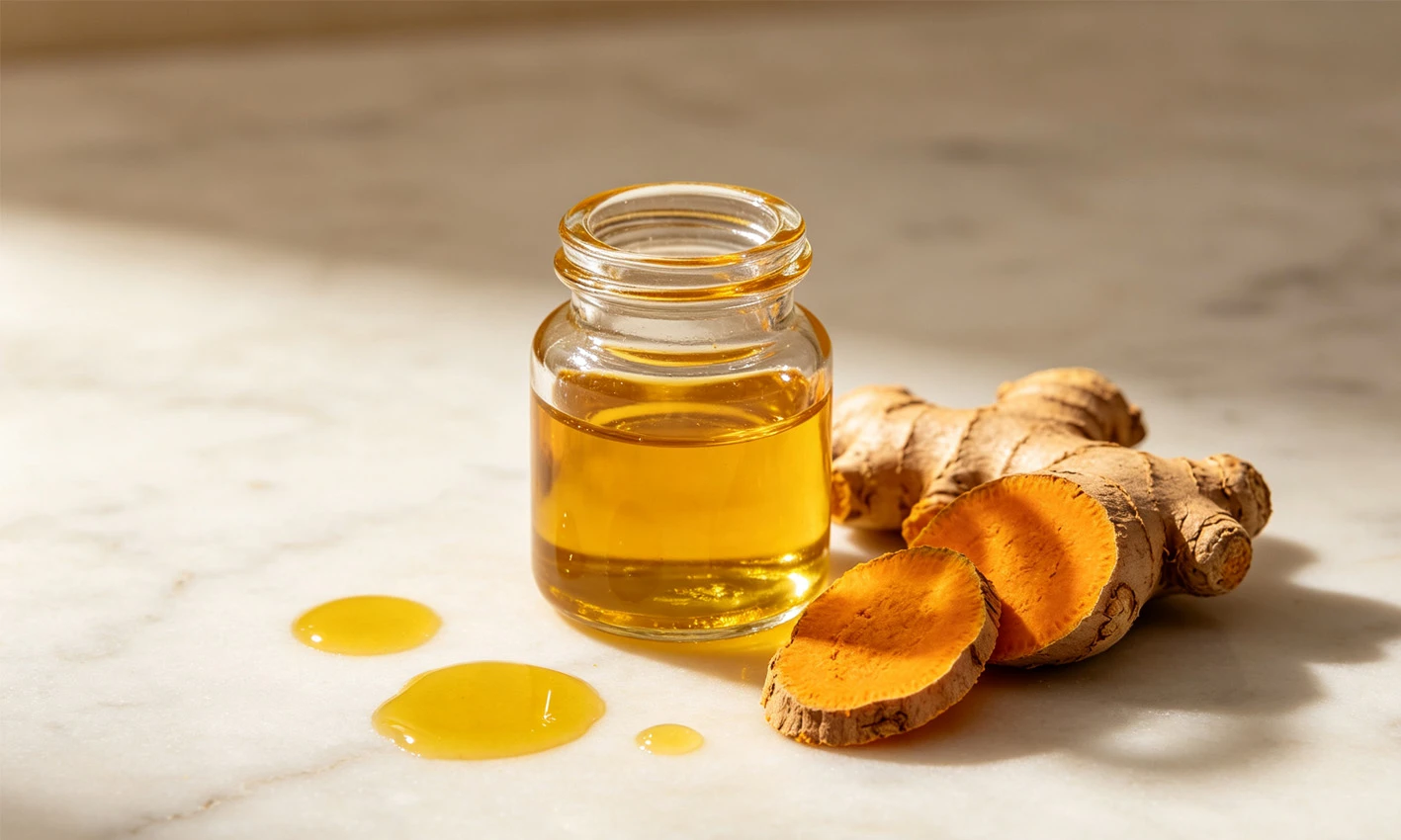
A crude, oily extract obtained by solvent extraction of turmeric rhizomes, containing curcuminoids, turmeric volatile oil, and resin. Total curcumin content is generally 10-40%, oil-soluble, a viscous, orange-red paste.
Industry Uses: Food industry coloring, sauces, compound seasonings, E100 natural pigment raw material. Widely circulated among domestic food coloring companies, unsuitable as a raw material for high-efficacy health products due to its high volatile oil content and tendency to crystallize and separate during storage.
3. Standardized 95% Total Curcumin Extract (C3 Complex)
Currently the most mainstream basic raw material for global dietary supplements. Refined and purified from turmeric oleoresin, **total curcuminoids ≥95%**, composed of approximately 75% curcumin, approximately 20% demethoxycurcumin, and approximately 5% didemethoxycurcumin. An orange-yellow crystalline powder, almost insoluble in water, soluble only in organic solvents and oils.
Note: This type is what the industry commonly refers to as free curcumin. It has very low bioavailability and poor absorption after oral administration. Many basic curcumin capsules on the market use this raw material, often in combination with black pepper extract (piperine) to inhibit metabolic enzymes and enhance absorption. It is also the basic starting material for all modified curcumin.
II. Chemical Monomers and Metabolic Derivatives
1. Single Curcumin Monomer
95% of total curcumin is further separated and purified, retaining only the curcumin monomer and removing the other two analogues. Its market circulation is very small, mostly used in scientific research experiments; it is rarely used on a large scale in the health supplement industry due to its high cost.
2. Tetrahydrocurcumin (THC)
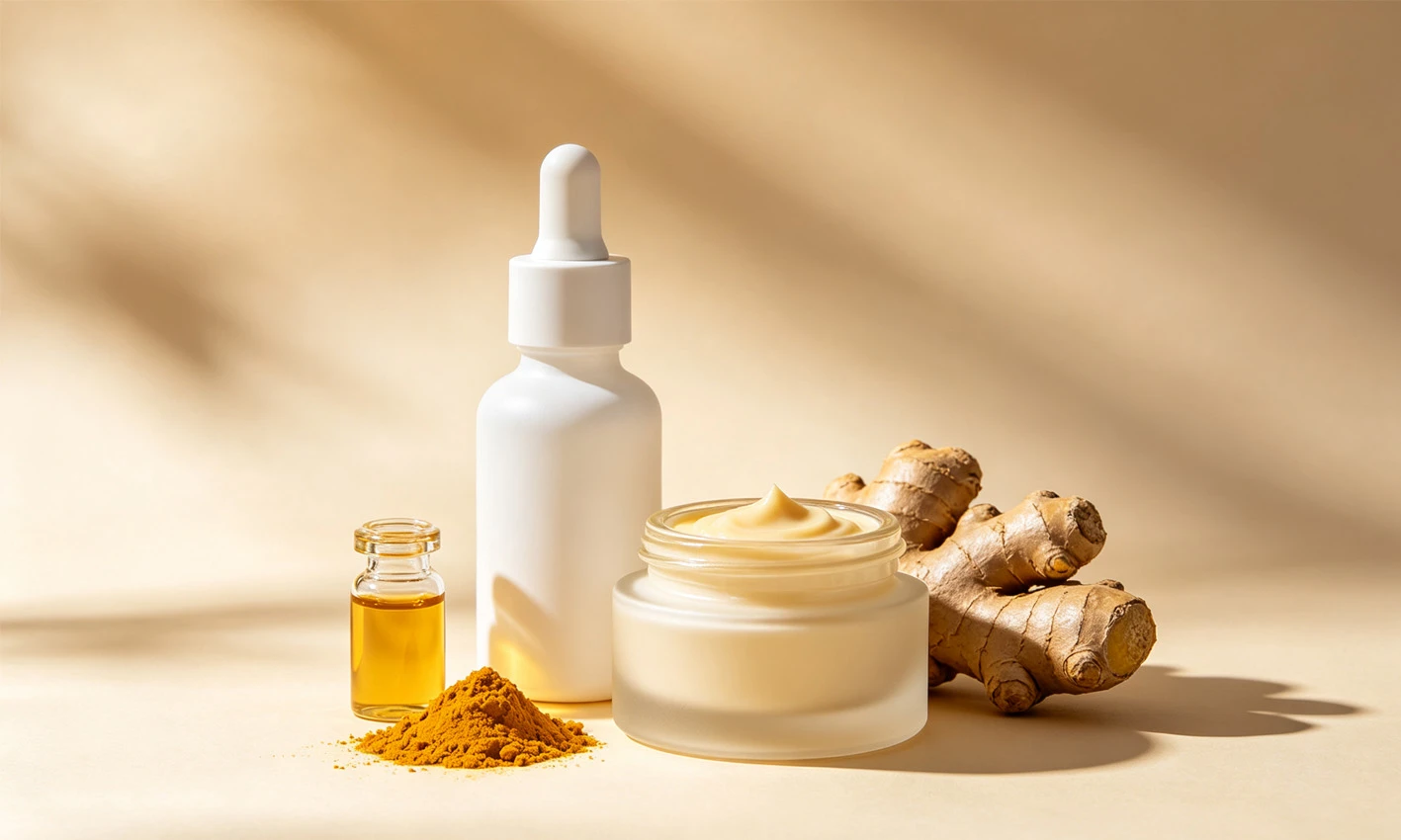
The main metabolite of curcumin in the body. Curcumin itself is metabolized and reduced in the liver to form tetrahydrocurcumin. Industrially, it can be prepared through hydrogenation processes, in powder form, with outstanding antioxidant properties and better stability than native curcumin.
Industry Applications: Primarily used as a raw material in cosmetics and skincare products, and in some high-end dietary supplements. This is not the same substance as regular curcumin. When purchasing, it's crucial to distinguish the indicators and avoid confusing it with regular 95% curcumin (PMC).
III. Modified Solubilization/Delivery System (High Bioavailability Curcumin)
Using 95% total curcumin as the starting material, this system addresses the pain points of poor water solubility and absorption through process modification. It has become a mainstream high-value-added raw material in recent years. Different processes result in significant differences in product performance and price. Downstream formulation selection should focus on the underlying technology, not just marketing terms.
1. Piperine Compound Curcumin
This is a physical mixture of 95% curcumin and piperine extracted from black pepper. It does not alter the molecular structure of curcumin. Piperine inhibits UGT metabolic enzymes in the body, reducing the rapid decomposition and excretion of curcumin.
Advantages: Simple process, controllable cost; Disadvantages: Some people are intolerant to piperine, experiencing heartburn. It is a physical compound, not a molecular modification.
2. Curcumin-Phospholipid Complex (Phytosome)
Representative ingredient: Meriva. Curcumin and soybean phospholipids form a molecular complex under specific solvent conditions, altering the lipid-water partition coefficient and improving transcellular absorption. The raw material is generally a light yellow powder. Supported by extensive human pharmacokinetic data, it is a mature category in overseas health supplement markets. Note that phospholipid complexes are not simple physical mixtures; the production process is complex, and counterfeit products containing ordinary curcumin and phospholipid powder exist on the market.
3. Turmeric Essential Oil Self-Emulsifying System (BCM-95®)
This system does not add phospholipids, retaining the volatile oil of turmeric itself. Curcumin is dispersed in the turmeric essential oil to form a self-emulsifying powder. No additional piperine is needed, making it suitable for people with sensitive stomachs. It belongs to the whole-component turmeric extract route, and the total curcumin content will be lower than the standard 95% curcumin.
4. Solid Lipid Particle Curcumin (SLCP Technology, Longvida®)
Curcumin is encapsulated in solid lipid microparticles, with particle size controlled at the submicron level. This protects the active ingredient from rapid degradation by stomach acid, achieving sustained release. Studies show it can penetrate the blood-brain barrier. Bioavailability is significantly improved, and the raw material price is significantly higher than ordinary curcumin. It is mostly used in high-end dietary supplements.
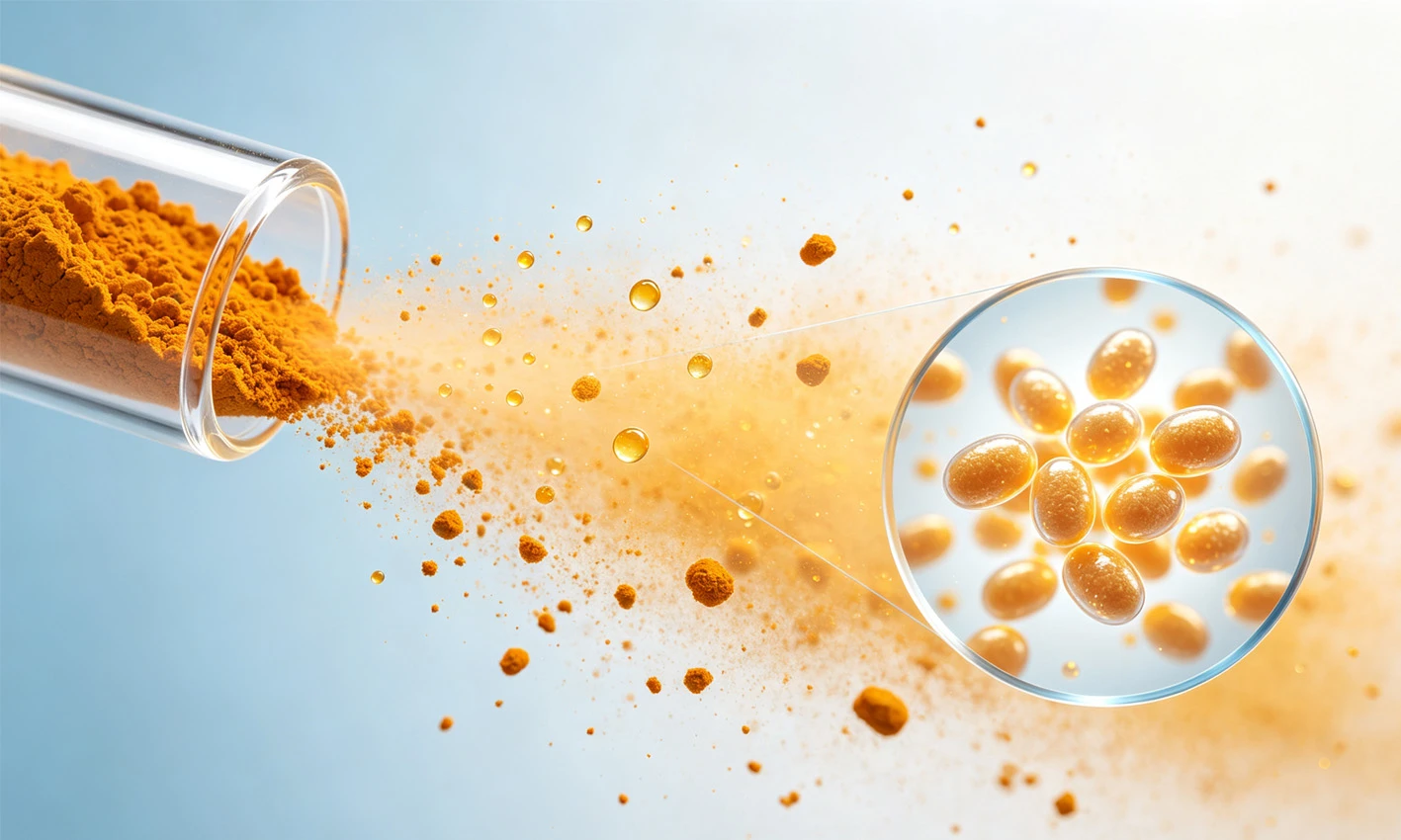
5. Microencapsulated/Spray-Dried Water-Soluble Curcumin Powder
This is the largest category of modified curcumin used in the food and beverage industry. Using encapsulation materials such as maltodextrin and gum arabic, it is spray-dried to obtain a cold-water-dispersible yellow powder.
Key Distinction: This type of product only achieves water dispersion, not true molecular dissolution. Slight precipitation may occur after prolonged standing. Main Applications: Solid beverages, meal replacements, functional drinks; less commonly used in health supplement capsules. Many food-grade water-soluble curcumin products have low total curcumin loading, only 5-20%. When purchasing, always check the content indicators and do not rely solely on the name "water-soluble curcumin."
6. Cyclodextrin Encapsulation of Curcumin
Curcumin molecules are embedded in the cavity of β-cyclodextrin, achieving solubilization and improved stability. Compared to microcapsules, it does not require a large amount of carbohydrate wall material, resulting in a higher active ingredient loading. It is suitable for transparent liquid formulations; however, the amount of cyclodextrin added is restricted by food regulations in different countries, and compliance limits should be noted for exported products.
7. Micelles and Liposomes for Curcumin
Micelles (Novasol) utilize surfactants to form micelles that encapsulate curcumin; liposomes encapsulate it using phospholipid bilayer vesicles. Both have excellent solubilizing effects, but the challenge in industrial scale-up lies in storage stability. They are prone to encapsulation rupture and curcumin precipitation, making shelf-life control of the final product difficult, and the finished product price is high. Currently, they are mostly used in oral liquid dosage forms, with solid dosage forms less widely adopted.
Industry Reminder: The vast majority of commercially available raw materials labeled "nano curcumin" are not high-molecular polymer nanoparticles, but rather submicron-level dispersions/micelles. True high-molecular-weight nano curcumin is mostly still in the research stage; industrial mass production costs are very high. When purchasing, verify the underlying process specifications and don't be misled by conceptual terms.
IV. Key Practical Points for Product Selection
1. Seasonings and general food coloring: Prioritize turmeric oil resin and turmeric powder;
2. Common affordable dietary supplements: 95% total curcumin, with optional piperine formulation;
3. Finished products for those seeking high absorption and those with sensitive stomachs: Phospholipid complexes, solid lipid particles, and BCM-95;
4. Solid beverages and instant products: Spray-dried microcapsules and cyclodextrin inclusion complexes;
5. Cosmetic antioxidants: Prioritize tetrahydrocurcumin.
While all are called "curcumin," different forms have vastly different active ingredient content, solubility, bioavailability, regulatory classification, and price. In trade and formulation development, one cannot simply look at the product name; it is necessary to verify the total curcumin content, process specifications, and COA test reports. For exported products, it is also necessary to verify the raw material access standards of each country.
Shaanxi Lvke Chunyuan Biotechnology Co., Ltd.
Our address
Huaxia Yue World, Weibin District, Baoji City, Shaanxi Province,china
Phone Number
86-13992760792( Grace liu Sales manager )