With cleansing and makeup, and plant-based active ingredients becoming mainstream in the industry, many traditional plant-based raw materials are being rediscovered, and curcumin is a prime example. This polyphenolic active substance, derived from the rhizome of turmeric, has long since transcended its traditional roles as a fragrance and medicinal ingredient, gradually securing a place in the skincare market. However, its industrialization is not simply a matter of direct addition; it has undergone multiple tests, including raw material iteration, breakthroughs in formulation technology, market education, and compliance management, before truly gaining a foothold.
I. The Origin of the Raw Material: From Traditional Herbs to Cosmetic-Grade Active Ingredient
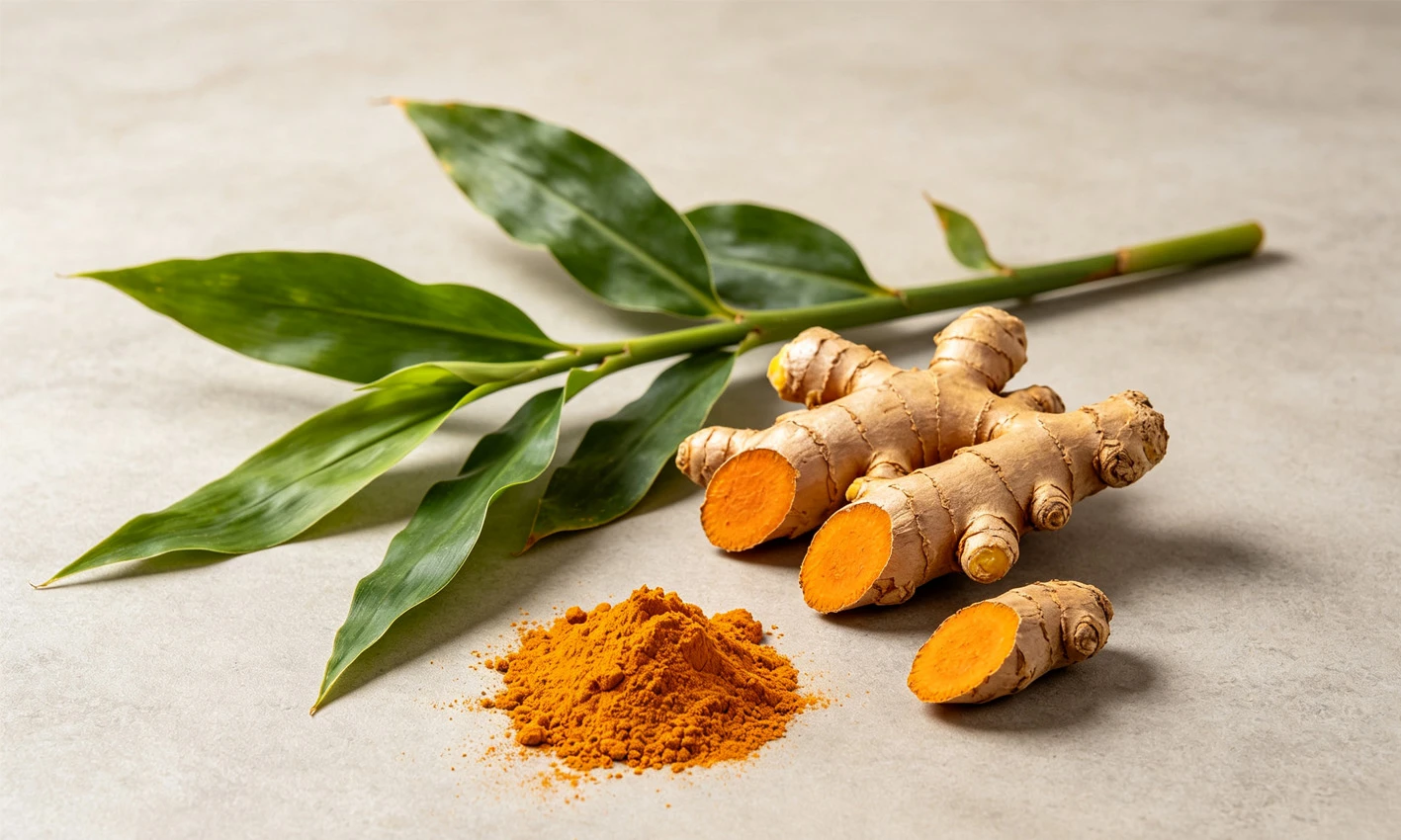
Source of raw materials
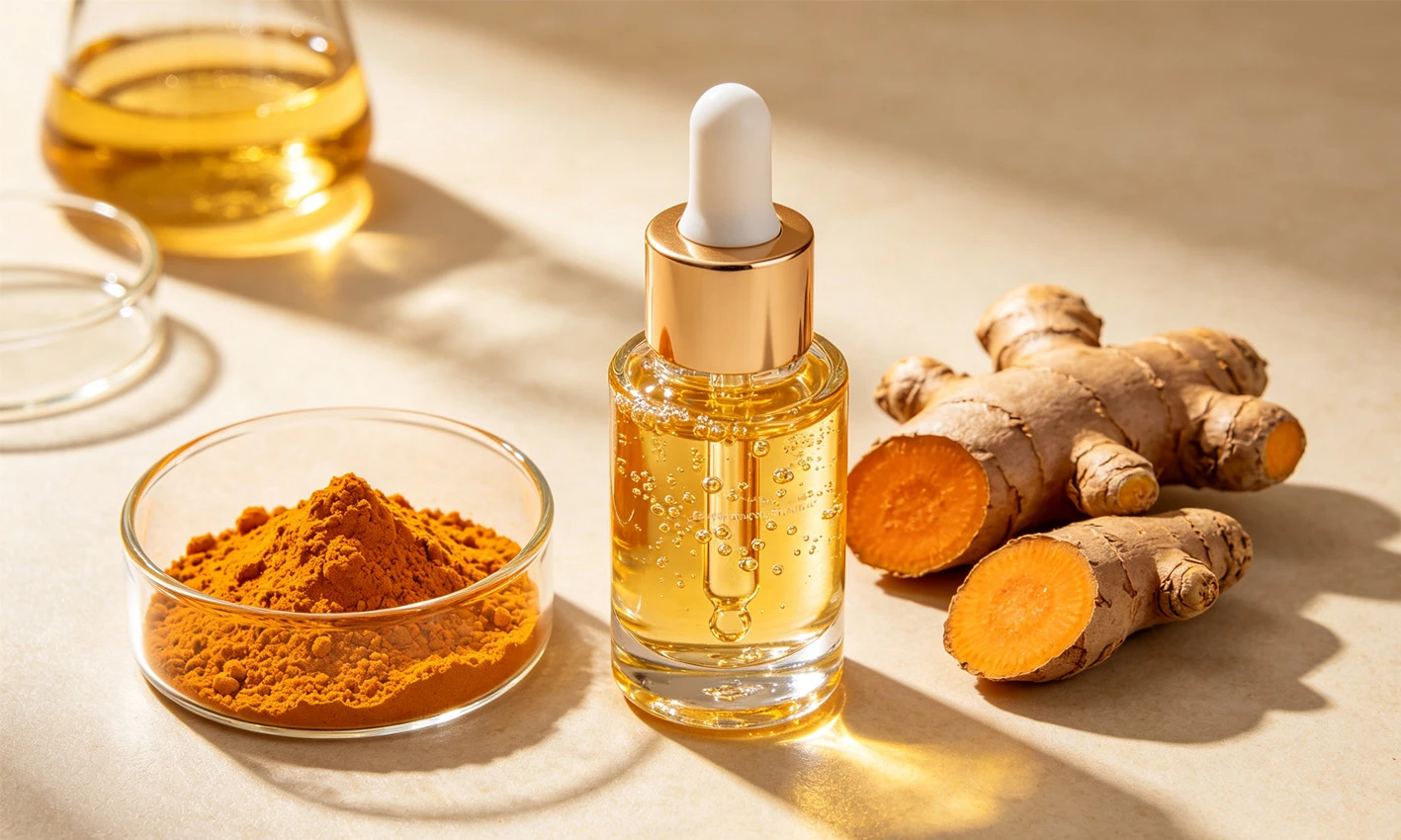
Curcumin is extracted from the dried rhizome of the turmeric plant (Zingiberaceae family). It is the core active ingredient in turmeric extract and is a collective term for three types of substances: curcumin, demethoxycurcumin, and didemethoxycurcumin, all characterized by their distinctive orange-yellow hue. Traditionally used primarily in dietary therapy and topical folk skincare, direct use of raw turmeric powder can lead to problems such as staining, impurities, and unstable activity, making it unsuitable for modern cosmetic production.
The curcumin used in the cosmetics industry is not simply turmeric powder, but a standardized extract. Upstream factories use solvent extraction and purification to produce raw materials of different specifications. The mainstream specification for cosmetics is a total curcumin content of 50%-95%. Unlike food and health product raw materials, cosmetic-grade raw materials are strictly controlled for heavy metals, pesticide residues, and impurities, and are adapted to the requirements of skincare product bases. Domestically, turmeric raw materials are mainly produced in Yunnan, while overseas raw materials are primarily from India. The global supply chain has achieved large-scale supply capabilities, laying the foundation for downstream brand applications.
II. Skincare Value: Multi-Target Activity Meets Current Consumer Needs
The core reason for curcumin's popularity lies in its multiple skincare benefits that address market pain points, supported by data from in vitro experiments and some small-sample human clinical trials.
Firstly, it has strong antioxidant capabilities, capable of scavenging free radicals in the skin, resisting photoaging, and exhibiting antioxidant capacity superior to vitamin E, alleviating skin oxidation and dullness caused by external environmental factors.
Secondly, it boasts outstanding anti-inflammatory and soothing effects, improving skin redness and irritation. It alleviates inflammatory acne and skin stress, making it suitable for sensitive and acne-prone skin, a key reason why many repair products choose it.
Thirdly, it can inhibit tyrosinase activity, helping to improve uneven skin tone and dullness, resulting in a brightening effect. It also possesses some antibacterial properties, helping to improve the skin's microenvironment.
In addition, it has weak UV absorption capabilities, making it a suitable ingredient for sunscreen formulations and a natural plant pigment. Its multi-purpose nature aligns with the development needs of cleansing-labeled products.
The CIR (Corporate Identity Research Institute) provides a safety reference for topical use: The reasonable concentration for topical use of skincare products is ≤2%, with a normal sensitization rate of less than 0.5%. Overall, it is classified as a low-irritant plant-based active ingredient. However, high concentrations may cause temporary yellowing of the stratum corneum, which usually subsides within 24-48 hours.
III. Industry Pain Points: Practical Challenges that Once Restricted the Large-Scale Application of Curcumin
Curcumin has high skincare potential, but its large-scale application was difficult in the early stages due to three major flaws in its formulation, problems commonly encountered by many plant-based active ingredients.
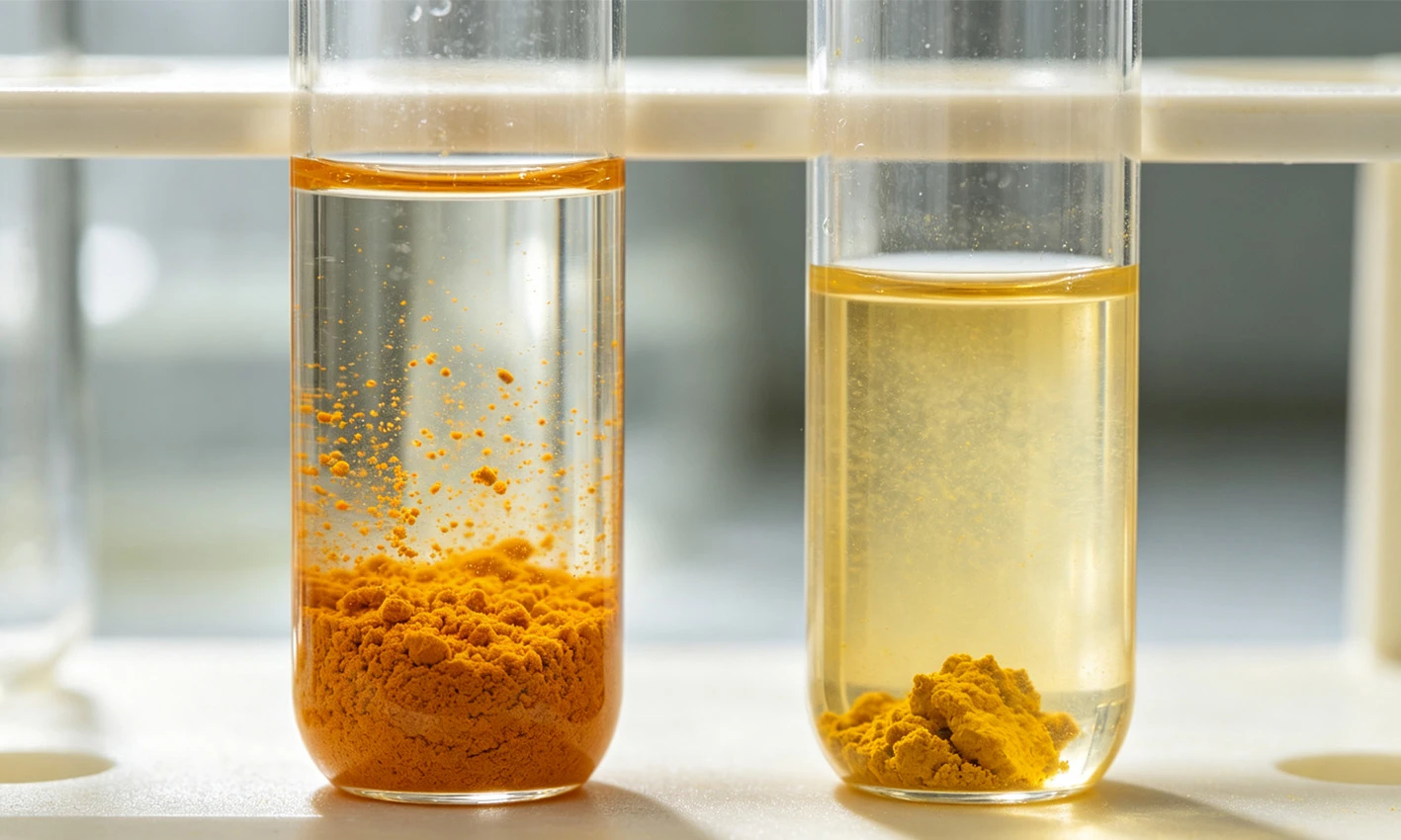
Solubility
1. Poor Solubility: Curcumin is highly lipid-soluble and almost insoluble in water. It is difficult to disperse evenly in ordinary water-based essences and toners, and direct addition easily leads to precipitation, preventing the active ingredients from reaching the skin and exerting their effects.
2. Stability Shortcomings: It is sensitive to light, high temperatures, and alkaline environments. It is easily degraded and inactivated by light exposure; it will rapidly change color in alkaline systems with a pH greater than 8; it will also change color and deteriorate upon contact with metal ions such as iron. Strict requirements are placed on the formulation system and packaging materials; ordinary formulation systems are prone to discoloration and activity reduction.
3. Skin Staining Problems: As a natural yellow pigment, when the concentration is high, the skin, towels, and pillowcases will be stained yellow after using the product. Many early popular turmeric masks were criticized by consumers for staining, affecting the product experience and becoming one of the biggest obstacles to marketization.
Early products often only incorporated curcumin as a marketing gimmick, using extremely low concentrations and failing to address delivery challenges. They merely used curcumin for marketing purposes, resulting in limited actual skincare benefits and mixed market opinions.
IV. Technological Breakthrough: Advances in Delivery Technology Overcome Industrialization Barriers
The real-world application of curcumin in recent years has been driven by iterative advancements in formulation technology, addressing key pain points such as solubility, transdermal absorption, stability, and staining. Mainstream industry solutions fall into several PMC (Product-Purpose Controlled Carrier) categories.
The first is nano-encapsulation technology, using liposomes, nanoemulsions, and nanostructured lipid carriers to encapsulate curcumin within the lipid carrier. This isolates curcumin from light and metal ions, improving storage stability; it also improves water solubility, enhancing skin penetration, and locks the pigment within the carrier, reducing skin staining. High-end serums and repair products often use this type of raw material, but the cost is significantly higher.
The second approach is rational dilution and formulation. For mass-market products, the curcumin content is controlled within the range of 0.05-0.5%. While ensuring activity, this minimizes staining. It's combined with tocopherol and the chelating agent EDTA to reduce oxidative degradation. The formula's pH is controlled between 4.5 and 6.5, close to the skin's natural pH, avoiding an alkaline environment and ensuring system stability.
The third approach is synergistic compounding. The industry commonly combines curcumin with Centella asiatica extract, ectoine, and niacinamide to achieve synergistic effects in anti-inflammation and brightening, compensating for the shortcomings of single ingredients while reducing the risks associated with high doses of a single ingredient. This is a common formulation strategy used in domestic skincare products.
With technological advancements, the market is no longer limited to high-cost, high-end products. Mass-market masks, creams, and serums can effectively incorporate this ingredient, driving its rapid popularization.
V. Downstream Application Scenarios: Multi-category Implementation, Gradually Clearer Product Positioning
Through market selection, the application scenarios for curcumin have become clear, and it's no longer blindly piled into all product categories.
Serums are the most prominent product category, with anti-inflammatory and repairing serums and brightening/antioxidant serums accounting for the largest share. Many brands position them as stabilizing ingredients for acne-prone and redness-prone skin. Next are masks, with cream-based repair masks and overnight brightening masks being frequently used. Creams and lotions generally use low concentrations for long-term stabilization and daily antioxidant repair. Additionally, they are added to after-sun repair products and scalp care products to soothe scalp redness and discomfort through their anti-inflammatory properties. They are also used in small quantities as a natural yellow pigment in the makeup industry.
The market is also polarized. High-end lines often use nano-encapsulated curcumin, emphasizing high activity and low coloring; while some affordable products still use ordinary turmeric extract, which may involve added marketing hype and noticeable coloring, resulting in significant differences in product effectiveness.
VI. Market and Compliance: Opportunities and Industry Chaos Amidst the Natural Ingredient Wave
The global cleansing and beauty trend has driven the growth of plant-based active ingredients. The curcumin cosmetics sector has maintained stable growth. Overseas independent brands and Ayurvedic skincare brands have long been investing in this ingredient, and in recent years, domestic brands have followed suit, using curcumin as a differentiating selling point to compete with popular repairing plant ingredients like centella asiatica and olive oil.
However, the industry also suffers from various problems. First, there is excessive marketing; some products exaggerate their effects, claiming to be "natural retinol alternatives" or "rapidly remove blemishes." These claims lack sufficient clinical evidence and constitute illegal and exaggerated advertising. Second, there is the issue of conceptual addition; some products are listed late in the ingredient list, with extremely low actual effective amounts, relying solely on advertising to attract consumers. Third, the quality of raw materials is inconsistent; some manufacturers use crudely extracted curcumin powder instead of standardized curcumin, resulting in more impurities and poor stability.
In domestic cosmetic regulations, turmeric extract and curcumin are classified as ordinary cosmetic raw materials without any prohibition or restrictions. However, strict quality control of raw materials is required, and efficacy claims must be supported by corresponding experimental data. Claims of medical effects cannot be made arbitrarily. Overseas CIRs also provide safety assessments for topical use, requiring raw material manufacturers and brands to conduct risk assessments according to compliance requirements to mitigate risks.
VII. Future Development: Development Trends of Curcumin in the Cosmetics Industry
First, formulation technology continues to advance, and the cost of nano-encapsulated curcumin raw materials is gradually decreasing. It is no longer limited to high-end product lines; mass-market products can also use curcumin raw materials with high bioavailability.
Second, efficacy positioning is becoming more rational. The industry will reduce exaggerated marketing and return to genuine capabilities, focusing on anti-inflammatory repair, anti-oxidation, and improvement of dullness, rather than hyping up false concepts.
Efficacy
Second, efficacy positioning is becoming more rational. The industry will reduce exaggerated marketing and return to genuine capabilities, focusing on anti-inflammatory repair, anti-oxidation, and improvement of dullness, rather than hyping up false concepts.
Third, compound formulation systems will continue to be developed, scientifically combining with other plant extracts and synthetic active ingredients to develop more finished products targeting sensitive and problem skin.
Fourth, the supply chain is becoming more standardized, with increased standardization at the raw material level. Cosmetic-grade and food-grade raw materials will be differentiated, and control over pesticide residues and heavy metals will be stricter.
Conclusion
The rise of curcumin from a traditional herbal ingredient to a mainstream cosmetic ingredient is not the result of marketing hype, but rather a combination of breakthroughs in raw material purification and formulation delivery technologies, coupled with consumer demand for natural repairing ingredients. Its development path is also a microcosm of many plant-based active ingredients: natural does not equate to ready-to-use; practical formulation challenges such as solubility, stability, and user experience need to be addressed. Simultaneously, excessive marketing and adherence to regulatory standards are crucial for it to truly establish itself in the cosmetics industry and continue to deliver value.
Shaanxi Lvke Chunyuan Biotechnology Co., Ltd.
Our address
Huaxia Yue World, Weibin District, Baoji City, Shaanxi Province,china
Phone Number
86-13992760792( Grace liu Sales manager )