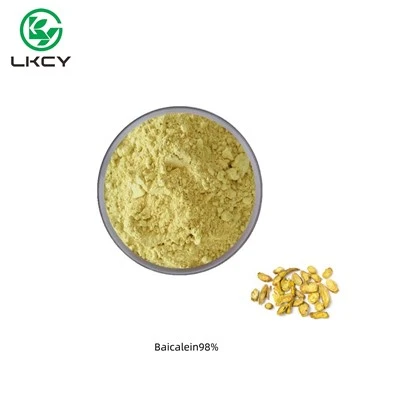
Scutellaria baicalensis, a perennial herb belonging to the genus Scutellaria in the Lamiaceae family, is a commonly used traditional Chinese medicine for clearing heat and dampness, purging fire and detoxifying. Baicalin and baicalein are the two most abundant flavonoid active monomers in the rhizome of Scutellaria baicalensis and are also core target components in current ocular pharmacological research. Modern pharmacology has confirmed that these two components possess multiple biological activities, including anti-inflammatory, antioxidant, anti-angiogenic, anti-tumor, and inhibition of pyroptosis and ferroptosis. They also exhibit extremely low cytotoxicity to ocular tissues and cells and high biocompatibility, demonstrating significant intervention potential in basic research on various ocular diseases such as corneal diseases, glaucoma, retinal diseases, intraocular tumors, and refractive system diseases. Compared to traditional ophthalmic chemical drugs, the advantages of natural flavonoids-multi-target, low drug resistance, and low toxicity-make them a research hotspot for novel ophthalmic drug candidates. This article systematically reviews recent basic research findings on the intervention of baicalin and baicalein in various ocular diseases, summarizes their core mechanisms of action, analyzes current research shortcomings and future development directions, and provides theoretical reference for their translational application in ophthalmology.
1. Core Pharmacological Effects and Basic Mechanisms
Baicalin and baicalein have similar structures, overlapping pharmacological activities, and different focuses. Both achieve multidimensional protection against ocular damage by regulating multiple classical signaling pathways, which is the core pharmacological basis for their intervention in ocular diseases. Furthermore, in vitro cell experiments and in vivo animal experiments have confirmed that there is no significant ocular tissue toxicity at effective therapeutic concentrations.

Core Pharmacological Effects and Basic Mechanisms
Anti-inflammatory activity is the core advantage of both components. They can significantly inhibit the activation of the nuclear factor κB (NF-κB) pathway, reduce the release of pro-inflammatory factors such as tumor necrosis factor-α and interleukins, and block the cascade amplification of ocular inflammation. Simultaneously, baicalin can target and regulate the TSLP/TSLPR signaling pathway, inhibiting ocular tissue damage mediated by inflammatory mediators; baicalin can regulate microglia polarization, inhibit the proliferation of pro-inflammatory M1 microglia, promote the activation of anti-inflammatory and repair-promoting M2 cells, and alleviate the chronic inflammatory microenvironment of the eye.
Antioxidative damage effects are a crucial support for its ocular protection. Ocular tissues are highly susceptible to oxidative damage due to prolonged exposure to light and oxidative stress. Both components can activate the Nrf2 antioxidant pathway, scavenging reactive oxygen species in the retina, cornea, and optic nerve tissue, enhancing cellular antioxidant capacity, inhibiting oxidative stress-induced apoptosis, and effectively alleviating ocular cell damage caused by various factors such as high glucose, glutamate, and hypoxia.
Furthermore, both possess clear anti-angiogenic, anti-apoptotic, anti-fibrotic, and anti-tumor activities. It can inhibit abnormal angiogenesis by blocking pathways such as HIF-1α/VEGFA and PI3K/AKT/mTOR; regulate the JAK2/STAT3 pathway to inhibit ferroptosis and apoptosis of retinal nerve cells; and simultaneously inhibit the proliferation, migration, and invasion of intraocular tumor cells, providing new therapeutic targets for proliferative and neoplastic ocular diseases.
2. Advances in Intervention Research for Different Ocular Diseases
2.1 Corneal Diseases
Infectious keratitis is a major type of blinding corneal disease. Among them, Aspergillus fumigatus keratitis has a high clinical incidence and rapid disease progression. Conventional antifungal drugs have problems such as drug resistance and corneal toxicity. Recent basic research has confirmed that baicalin and baicalein both have direct inhibitory effects on Aspergillus fumigatus and significant anti-inflammatory effects.
In vitro experiments showed that baicalin, within a safe concentration range, can inhibit the growth, spore adhesion, and biofilm formation of *Aspergillus fumigatus*, disrupt the ultrastructure of fungal hyphae, and block the spread of fungal infection at its source. Simultaneously, it can downregulate TSLP-mediated inflammatory responses, reducing inflammatory infiltration and edema damage in corneal tissue. Baicalin, at a concentration of 75 μg/mL, showed no corneal epithelial cell cytotoxicity and can alleviate corneal tissue damage by inhibiting the pyroptosis pathway, blocking programmed cell death in corneal cells induced by fungal infection. Animal keratitis model experiments further validated that after intervention with both components, the corneal inflammation score in mice was significantly reduced, the fungal load was significantly decreased, and the corneal epithelial repair rate was significantly improved, effectively improving the pathological damage of infectious keratitis.
2.2 Glaucoma and Optic Nerve Damage The core pathological features of glaucoma are progressive apoptosis of retinal ganglion cells, optic nerve atrophy, and visual field defects. Chronic oxidative stress and neuroinflammation are key inducing factors for disease progression and are currently the focus of research on neuroprotective treatment for glaucoma. Numerous basic studies have confirmed that baicalin has a clear protective effect on retinal ganglion cells.
Oxidative stress damage caused by excessive glutamate accumulation is a crucial mechanism for retinal ganglion cell injury. Studies using glutamate-induced R28 retinal cell injury models and rat retinal injury models have shown that baicalin can significantly improve the survival rate of damaged retinal ganglion cells by regulating the JAK/STAT signaling pathway, reducing cellular oxidative stress levels, inhibiting neuronal apoptosis, and regulating the JAK2/STAT3 and Nrf2 pathways. Other studies have demonstrated that baicalin can inhibit microglial cell overactivation, reduce neuroinflammation-mediated retinal ganglion cell ferroptosis, and delay optic nerve degenerative damage by regulating the JAK2/STAT3 and Nrf2 dual pathways.
Simultaneously, studies on trabecular meshwork damage in glaucoma have found that baicalin can reduce intracellular reactive oxygen species levels in human trabecular meshwork cells, inhibit the secretion of pro-inflammatory factors such as IL-1α, alleviate trabecular meshwork inflammation, and improve the aqueous humor metabolic microenvironment, thus intervening in glaucoma from multiple targets. Baicalin can also reduce optic nerve damage under high intraocular pressure through its antioxidant and anti-inflammatory effects, providing a new research direction for neuroprotective treatment of glaucoma.

2.3 Retinal Vascular and Degenerative Diseases
Retinal vascular diseases such as retinal vein occlusion and diabetic retinopathy are characterized by hypoxia-induced abnormal angiogenesis, retinal edema, and neuroepithelial damage. Basic research shows that baicalin can inhibit the HIF-1α/VEGFA signaling axis, downregulate vascular endothelial growth factor expression, inhibit abnormal retinal angiogenesis, and reduce retinal vascular leakage and tissue edema. In a rat model of retinal vein occlusion, baicalin intervention significantly improved the pathological morphology of retinal tissue, reduced retinal cell apoptosis, and delayed retinal degenerative damage.
Furthermore, studies on age-related retinopathy have found that the antioxidant activity of both components can effectively combat retinal pigment epithelial cell damage induced by blue light and oxidative stress, maintain the normal morphology and function of retinal pigment epithelial cells, and delay the progression of retinal age-related degenerative diseases, providing experimental evidence for the prevention and treatment of age-related eye diseases.
2.4 Intraocular Tumors
Choroidal melanoma is a highly prevalent malignant intraocular tumor, characterized by high malignancy and metastasis. Traditional surgical, radiotherapy, and chemotherapy regimens suffer from significant damage to ocular tissues and high recurrence rates. Recent studies combining transcriptomics and network pharmacology have confirmed that baicalin has a significant anti-choroidal melanoma effect.
In vitro cell experiments and in vivo animal model studies show that baicalin can effectively inhibit the proliferation, migration, and invasion of choroidal melanoma cells by suppressing the PI3K/AKT/mTOR signaling pathway, while inducing tumor cell apoptosis, and exhibiting no significant toxicity to normal ocular tissue cells. This study clarifies the molecular mechanism of baicalin's anti-intraocular tumor effect, overcoming the limitations of traditional treatments and providing a new approach for the development of novel targeted therapies for choroidal melanoma.

2.5 Amblyopia and Visual Function Remodeling
The clinical treatment of adult amblyopia is extremely challenging. The core bottleneck is the near-complete loss of dominant plasticity of the visual cortex in adult mammals, making conventional interventions ineffective in restoring visual function. Breakthrough progress in basic research in 2026 confirmed that baicalin can effectively restart the ocular plasticity of the primary visual cortex in adult mice.
Through intrinsic signal optical imaging and electrophysiological recording, the study found that after intervention with appropriate concentrations of baicalin, the visual cortical neural plasticity of adult amblyopia model mice was significantly restored, effectively correcting visual function abnormalities caused by amblyopia. This breaks the traditional understanding of the solidification of visual function plasticity in adults and provides a new mechanism of action and experimental support for the clinical treatment of adult amblyopia.
3. Existing Problems and Limitations of Research
Currently, research on the intervention of baicalin and baicalein in ocular diseases is still mainly based on basic experiments. The overall research system is not yet complete, and there are still significant shortcomings before clinical translation and application. Firstly, existing studies mostly focus on the individual effects of single components, with fewer studies on the synergistic intervention effects of two components and the optimal ratio and concentration, failing to fully utilize the multi-target synergistic advantages of active ingredients in traditional Chinese medicine. Secondly, most mechanistic studies only verify the regulatory role of a single signaling pathway, lacking systematic analysis of multi-pathway cross-regulatory networks, resulting in an incomplete elucidation of the deep molecular mechanisms of drug action.
Thirdly, experimental studies mostly utilize in vitro cell models and small animal in vivo models, with limited modeling methods that cannot fully simulate the complex pathological microenvironment of human ocular diseases, thus limiting the clinical reference value of the experimental results. Fourthly, drug formulation research lags behind, currently focusing primarily on undiluted drug delivery, lacking research on novel formulations such as eye drops adapted to ocular physiological structures and capable of targeted sustained release, such as nano-formulations. The problems of low ocular bioavailability and short duration of action remain unresolved. Furthermore, key studies on the long-term ocular safety, in vivo metabolic kinetics, optimal dosage, and treatment duration of the two components are still incomplete.
4. Summary and Outlook
Baicalin and baicalein, with their multiple pharmacological activities including anti-inflammatory, antioxidant, anti-angiogenic, anti-tumor, and neuroplasticity-regulating effects, have demonstrated good interventional effects in basic research on various ocular diseases, such as corneal infectious diseases, glaucoma, retinal diseases, intraocular tumors, and adult amblyopia. Their mechanisms of action are clear, and their safety profile is high, indicating excellent potential for ophthalmic drug development. Existing basic research has fully confirmed the protective and repairing effects of these two components on multiple tissues and pathological injuries in the eye, laying a solid theoretical and experimental foundation for subsequent clinical research.
Future research should focus on breakthroughs in three directions: first, to deeply explore the synergistic pharmacological mechanisms of baicalin and baicalein, clarify the optimal combination, and enhance interventional effects; second, to conduct systematic mechanistic studies involving multiple pathways and targets to improve the molecular regulatory network system; and third, to develop novel ocular targeted sustained-release formulations, optimize drug delivery methods, and improve ocular bioavailability. At the same time, it is necessary to gradually carry out large animal model experiments and preclinical safety evaluations to promote the transformation of the two natural active ingredients from basic research to clinical ophthalmological treatment, and to provide new and safe treatment options for clinically refractory, degenerative, and neoplastic ophthalmic diseases.
Shaanxi Lvke Chunyuan Biotechnology Co., Ltd.
Our address
Huaxia Yue World, Weibin District, Baoji City, Shaanxi Province,china
Phone Number
86-13992760792( Grace liu Sales manager )