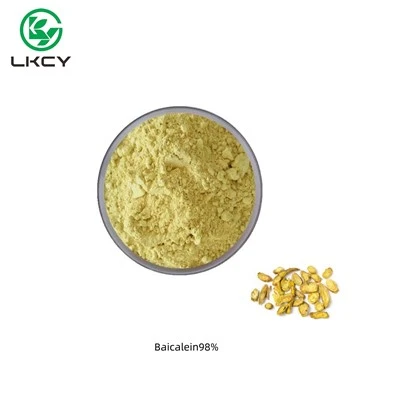
Scutellaria baicalensis, a perennial herb belonging to the genus Scutellaria in the Lamiaceae family, is a traditional and widely used Chinese medicinal herb, first recorded in the *Shennong Bencao Jing* (Shennong's Classic of Materia Medica). It possesses classic effects such as clearing heat and drying dampness, purging fire and detoxifying, stopping bleeding, and calming the fetus. Modern pharmacological studies have confirmed that the core active substances of Scutellaria baicalensis are flavonoids, among which baicalin and baicalein have the highest content, strongest activity, and are the most extensively studied. Baicalein is the aglycone of baicalin; the two can interconvert in vivo, exhibiting highly overlapping pharmacological activities but significant differences in intensity and target sites. In recent years, with the development of molecular biology, signal pathway sequencing, and molecular docking technology, the understanding of the pharmacological effects and molecular mechanisms of baicalin and baicalein has deepened. Their multi-dimensional pharmacological activities, including anti-inflammatory, antioxidant, antitumor, neuroprotective, antiviral, and organ-protective effects, have been gradually confirmed, providing solid theoretical support for their clinical application and new drug development. This article systematically reviews recent research findings, summarizes the core pharmacological effects, molecular mechanisms, and current research status of both baicalin and scutellarin, and analyzes current research limitations, providing a reference for subsequent basic research and clinical translation.

1. Material Basis and In vivo Metabolic Characteristics
Baicalin is the most abundant flavonoid glycoside in Scutellaria baicalensis, with the chemical structure 5,6-dihydroxy-7-O-glucuronic acid flavonoid. It has poor water solubility and extremely low lipid solubility, resulting in low oral bioavailability. Baicalein is the aglycone form of baicalin after the removal of glucuronic acid. Its lipid solubility is significantly improved, allowing it to more easily penetrate cell membranes, the blood-brain barrier, and other biological membrane structures, resulting in superior in vivo absorption efficiency compared to baicalin.
The metabolism of these two drugs is closely related: after oral administration, baicalin cannot be directly absorbed by the small intestine. It needs to be hydrolyzed into baicalein by intestinal flora β-glucuronidase. After absorption into the bloodstream, some baicalein can re-conjugate with glucuronic acid, converting back into baicalin and methylated metabolites, circulating and exerting its effects. This unique metabolic transformation mode determines the synergistic and differentiating effects of the two drugs in vivo. Compared to baicalin, baicalein has a faster onset of action and a wider tissue distribution, while baicalin has a longer metabolic half-life and a more prolonged effect. Both also possess the advantages of low toxicity and low drug resistance typical of natural drugs.
2. Core Pharmacological Effects and Molecular Mechanisms
2.1 Anti-inflammatory and Antioxidant Effects
Inflammation and oxidative stress are the core inducing factors of most chronic diseases, organ damage, and tumor development in the body. These are also the core pharmacological targets of baicalin and baicalein. Both can synergistically inhibit inflammation and scavenge oxygen free radicals through multiple pathways, with baicalein exhibiting significantly stronger antioxidant and anti-inflammatory activities than baicalin.
Regarding the anti-inflammatory mechanism, both primarily target the classical TLR4/NF-κB inflammatory signaling pathway, inhibiting pathway activation induced by inflammatory stimuli such as lipopolysaccharide (LPS), downregulating the release of downstream pro-inflammatory factors such as tumor necrosis factor-α (TNF-α), interleukin-1β (IL-1β), and interleukin-6 (IL-6), and simultaneously inhibiting the expression of inducible nitric oxide synthase (iNOS), reducing the synthesis of the inflammatory mediator nitric oxide, thus blocking the inflammatory cascade reaction at its source. Furthermore, baicalin can specifically inhibit the p38 MAPK/cPLA2 signaling pathway, reducing inflammatory infiltration in brain, liver, and kidney tissues, and effectively alleviating local tissue edema and damage.
Its antioxidant mechanism mainly relies on a dual pathway: directly scavenging reactive oxygen species (ROS) and activating the endogenous antioxidant system. Both can directly remove excess ROS accumulated in the body, reducing oxidative stress damage to cell membranes, DNA, and proteins; simultaneously, it upregulates the expression of the heme oxygenase-1 (HO-1) antioxidant protein, enhances the activity of endogenous antioxidants such as superoxide dismutase and glutathione, strengthens the body's antioxidant capacity, and maintains cellular redox homeostasis.

2.2 Antitumor Effects
Preclinical studies in recent years have confirmed that baicalin and baicalein have significant inhibitory effects on various tumor cells, including lung cancer, breast cancer, colon cancer, and skin cancer. They exert their antitumor activity through multiple pathways, such as intervening in tumor cell proliferation, apoptosis, invasion and metastasis, angiogenesis, and regulating the tumor microenvironment, without significant toxicity to normal cells. Compared with traditional chemotherapy drugs, they possess the advantages of high selectivity and low toxicity.
Regarding the inhibition of tumor proliferation and the induction of apoptosis, both can arrest the cell cycle of tumor cells, arresting colon cancer cells and breast cancer cells in the S phase and G2/M phase, inhibiting abnormal cell division and proliferation. Simultaneously, they activate the mitochondrial apoptosis pathway, upregulating the expression of the pro-apoptotic protein Bax and downregulating the expression of the anti-apoptotic protein Bcl-2, activating caspase-3/9 apoptotic proteases, and inducing programmed cell death in tumor cells. Furthermore, baicalein can target and inhibit the activity of 12-lipoxygenase (12-LOX), reduce the production of the pro-tumor metabolite 12(S)-HETE, and block tumor cell proliferation signal transduction.
In inhibiting tumor invasion and metastasis, both drugs can downregulate the expression of matrix metalloproteinases MMP-2 and MMP-9, inhibit the degradation of the tumor cell basement membrane and extracellular matrix, and block the epithelial-mesenchymal transition (EMT) process, thereby inhibiting tumor cell invasion and distant metastasis. In tumor angiogenesis regulation, they target the VEGF/VEGFR2 signaling axis, reduce the stability of hypoxia-inducible factor HIF-1α, inhibit tumor angiogenesis, cut off the nutrient supply to tumor cells, and suppress tumor growth.
In tumor microenvironment regulation, both drugs can modulate the function of tumor-associated immune cells and stromal cells, promote CD8⁺ T cell infiltration in tumor tissue, downregulate PD-L1 expression in tumor cells, and reverse tumor immune escape; simultaneously, they inhibit abnormal activation of tumor-associated fibroblasts (CAFs), improve the immunosuppressive state of the tumor microenvironment, and enhance the body's anti-tumor immune response. Furthermore, both drugs can inhibit abnormal tumor cell metabolism and exert tumor-suppressive effects by regulating classic tumor signaling pathways such as PI3K/AKT/mTOR and STAT3.
2.3 Neuroprotective Effects
Baicalin and baicalein can penetrate the blood-brain barrier and have good protective and repair effects on neurological diseases such as ischemic stroke, Alzheimer's disease, and Parkinson's disease. Their core mechanisms are closely related to anti-inflammation, anti-oxidation, inhibition of neuronal apoptosis, and improvement of neural microcirculation.
For cerebral ischemia-reperfusion injury, both can inhibit oxidative stress and inflammatory responses after cerebral ischemia-reperfusion, reduce brain tissue water content and infarct area, inhibit neuronal apoptosis, and improve cerebral microcirculation and neurological function deficits. For neurodegenerative diseases, baicalein can reduce neuronal damage caused by inflammatory factors by inhibiting cPLA2-mediated neuroinflammatory responses; it also regulates the cholinergic system in the brain, inhibits acetylcholinesterase activity, increases acetylcholine levels in the brain, improves learning and memory function, and delays neuronal degenerative changes. Furthermore, both can regulate the redox balance of the central nervous system, reduce neuronal damage caused by ROS accumulation, and have a certain intervention effect on chronic brain injury and neuropathic pain.
2.4 Antiviral Effects
Both have significant inhibitory activity against various RNA and DNA viruses, particularly coronaviruses, influenza viruses, and hepatitis B viruses, which have been extensively studied. Their antiviral effects are mainly exerted through a three-pronged approach: blocking viral invasion, inhibiting viral replication, and regulating the host immune response.
Regarding the novel coronavirus (SARS-CoV-2), in vitro experiments have confirmed that baicalin can form a hydrogen bond with the viral S protein at the Gln498 site, blocking the binding of the S protein to the host ACE2 receptor, with an IC₅₀ of 37.24 μM; baicalin reduces viral adsorption and invasion by downregulating host cell ACE2 expression, with an IC₅₀ of 109.6 μM. Simultaneously, both can inhibit the activity of key viral replication enzymes, block viral gene transcription and assembly, reduce viral load, and suppress the inflammatory storm caused by viral infection, thus alleviating lung tissue damage. Against influenza viruses and hepatitis B viruses, both can inhibit viral nucleic acid replication and protein expression, block the viral replication cycle, and simultaneously regulate the body's immune function, enhancing viral clearance capacity.
2.5 Multi-Organ Protective Effects
2.5.1 Liver Protection
Baicalin and baicalein have protective effects against chemically induced liver injury, alcoholic liver injury, non-alcoholic fatty liver disease, and liver fibrosis. Their mechanisms include inhibiting liver inflammation and oxidative stress, reducing liver function indicators such as transaminases and bilirubin; inhibiting hepatic stellate cell activation, reducing collagen deposition, and delaying the progression of liver fibrosis; and simultaneously regulating hepatic lipid metabolism, reducing lipid accumulation in hepatocytes, and improving the pathological damage of fatty liver.

2.5.2 Cardiovascular Protection
Both baicalin and baicalein can protect the integrity of vascular endothelium and improve vascular endothelial function through antioxidant, anti-inflammatory, and inhibition of vascular endothelial cell apoptosis effects; they also regulate lipid metabolism, inhibit abnormal platelet aggregation, and reduce the risk of atherosclerosis. Furthermore, they can regulate myocardial cell calcium homeostasis, reduce myocardial ischemia-reperfusion injury, and improve myocardial contractile function, showing potential intervention value for cardiovascular diseases such as hypertension and coronary heart disease.
2.5.3 Renal Protection
By inhibiting TLR4/NF-κB-mediated inflammatory responses and oxidative stress in renal tissue, baicalin and scutellarin reduce renal tubular epithelial cell damage, decrease urinary protein excretion, and improve renal function, they exhibit significant protective effects against drug-induced kidney injury, diabetic nephropathy, and other chronic kidney injuries.
3 Research Limitations and Existing Problems
While pharmacological research on baicalin and scutellarin has formed a relatively complete system, several shortcomings still hinder their clinical translation. Firstly, there is a disconnect between basic research and clinical application. Existing studies are mostly in vitro cell experiments and animal model experiments, lacking large-scale, multi-center, long-term randomized controlled clinical trials. Systematic data support is lacking regarding the clinical dosage, administration method, duration of efficacy, and long-term safety of these two drugs. Secondly, research on their mechanisms of action is not in-depth enough. Most studies focus on classical signaling pathways, with limited research on novel targets such as the regulation of non-coding RNA, gut microbiota, and epigenetics. Furthermore, the molecular mechanisms of their synergistic and differential effects have not been fully elucidated. Third, the formulations have significant shortcomings. Baicalin has poor water and lipid solubility, while baicalein is rapidly metabolized in vivo with a short half-life. Existing oral formulations have low bioavailability, and there is a lack of novel, highly effective, targeted, and long-acting formulations. Fourth, the dose-effect relationship is unclear. Systematic studies on the differences in pharmacological activity and toxicity of the two under different doses and dosing cycles are lacking, making it difficult to guide precise clinical medication.
4 Research Prospects
With the deepening of modern research on natural medicines, the multi-target and low-toxicity pharmacological advantages of baicalin and baicalein are becoming increasingly prominent, possessing broad prospects for new drug development and clinical application. Future research can focus on four directions: First, conduct standardized clinical trials to determine the optimal dosage, administration regimen, and safety thresholds for both drugs in treating various diseases, promoting the translation of basic research findings into clinical applications; second, utilize multi-omics technologies, molecular docking, gene editing, and other methods to deeply explore novel targets and signaling pathways of both drugs, elucidating their activity differences and synergistic mechanisms; third, optimize formulation processes, developing novel targeted formulations such as nano-formulations, liposomes, and microspheres to improve their solubility and bioavailability, enhancing targeted therapy efficacy; fourth, explore combined drug regimens of both drugs, clarifying their synergistic effects and toxicity reduction mechanisms with chemotherapy drugs, anti-inflammatory drugs, and antiviral drugs, providing new strategies for clinical combined treatment.
5 Conclusion
Baicalin and baicalein, as the core active components of Scutellaria baicalensis, have become hot topics in natural drug research due to their multiple pharmacological activities, including anti-inflammatory, antioxidant, antitumor, neuroprotective, antiviral, and multi-organ protective activities. By regulating multiple signaling pathways and intervening in multiple key stages of disease development, they exhibit multi-target, broad-spectrum, and low-toxicity pharmacological characteristics. Although current research still faces challenges such as insufficient clinical evidence, lagging formulation optimization, and inadequate mechanism research, the mechanisms of action of these two substances will be gradually improved with the continuous innovation of modern pharmacological research techniques. Their application potential in areas such as chronic disease prevention and control, adjuvant cancer therapy, antiviral therapy, and organ damage repair will be further explored, providing new ideas and directions for the innovative research and development of natural medicines and the treatment of clinical diseases.
Shaanxi Lvke Chunyuan Biotechnology Co., Ltd.
Our address
Huaxia Yue World, Weibin District, Baoji City, Shaanxi Province,china
Phone Number
86-13992760792( Grace liu Sales manager )