I. Industry Prior Understanding: Market Positioning of MT2 Peptide and 99% HPLC Purity
MT2 (Melanotan II) is a cyclic synthetic peptide with a theoretical molecular weight of 1024.18 Da. It is currently a core raw material in the global fields of skin pigmentation mechanisms, photoprotection, and melanocyte pharmacology experiments. The peptide industry classifies raw materials according to HPLC purity: 70%-85% crude peptides are only used for initial screening in vitro crude experiments; 95%-98% is for routine research-grade applications; ≥99.0% RP-HPLC purity is a high-end, precision experimental-grade supply standard, suitable for high-requirement scenarios such as cellular quantification, in vivo animal administration, and topical formulation development.
A common misconception in the industry is that a seller's label of 99% purity does not equal the percentage of MT2 dry matter in the material. HPLC analysis only counts UV-absorbable peptide impurities; moisture, trifluoroacetate (TFA counterion), and inorganic salts are not included in peak area calculations. The true meaning of 99% HPLC: Within the chromatogram, the target MT2 main peak area accounts for 99% or more of the total area of all peptide-related chromatographic peaks, with the remaining 1% representing synthetic or degradation-derived peptide impurities, and excluding solvents, salts, and other non-peptide components.
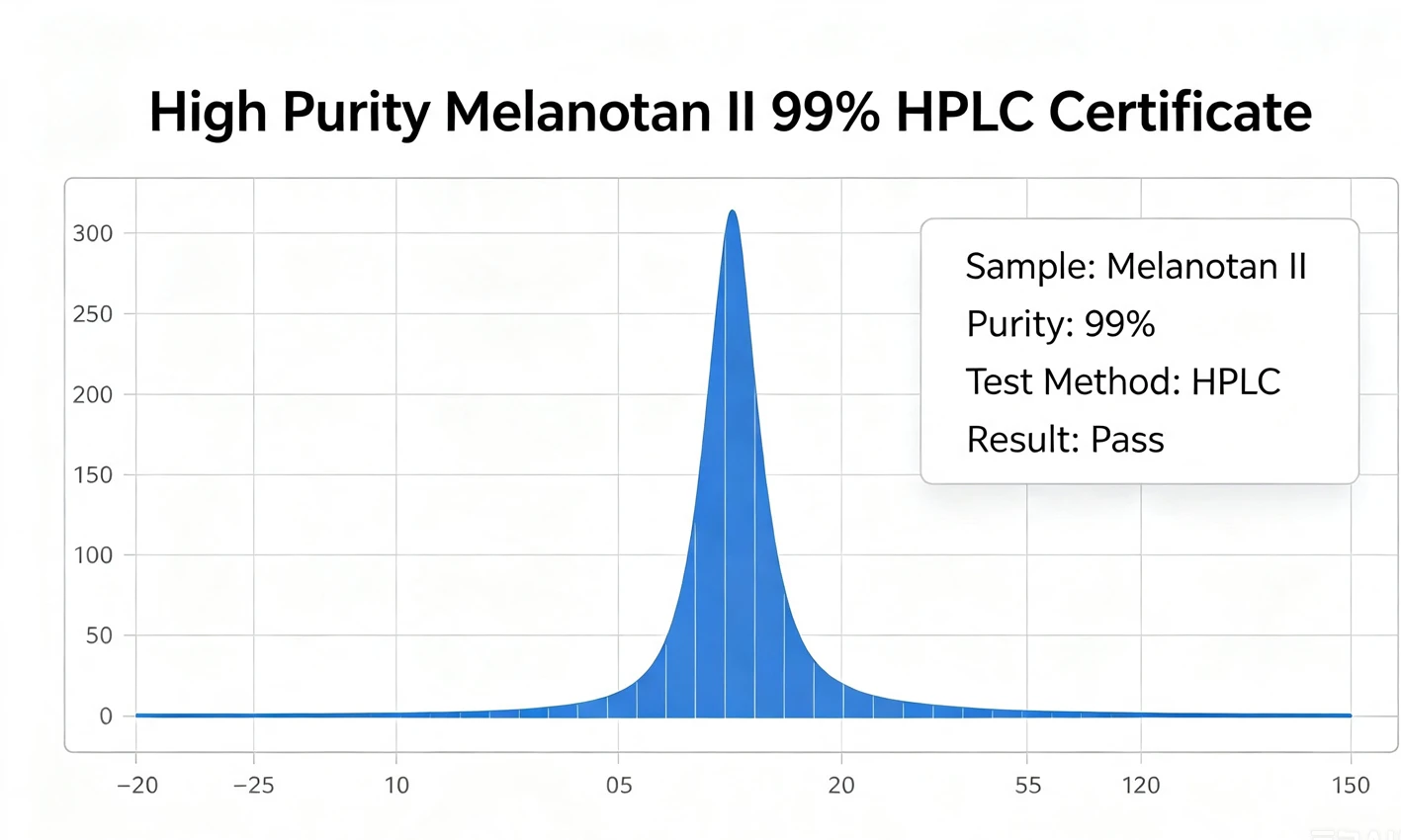
Domestic peptide raw material exports, university laboratories, and biopharmaceutical companies uniformly adopt reversed-phase high-performance liquid chromatography (RP-HPLC, C18 column, 220nm UV detection) as the legal method for determining MT2 purity. 214nm and 280nm are secondary verification wavelengths. All officially supplied batches must include a complete original chromatogram with their COA (Certificate of Analysis). Materials without a chromatogram but only indicating purity values do not meet the 99% high-purity supply standard.
II. Legal Basis for 99% HPLC Detection (Mandatory Supply Standards, All Required)
All suppliers issuing 99% purity reports must have their testing systems validated for system suitability. This is the first hurdle distinguishing ordinary testing from compliant high-purity testing, and a core entry point for verifying the Certificate of Accreditation (COA) during procurement.
Column Specifications:
Use a 4.6×250mm, 5μm particle size C18 reversed-phase column. Short columns and fine-particle-size fast columns are prohibited. Short columns provide insufficient resolution, impurities cannot be completely separated into peaks, easily leading to inflated purity values, a common adulteration method in the industry.
Mobile Phase Gradient System:
Phase A: 0.1% trifluoroacetic acid aqueous solution; Phase B: 0.1% trifluoroacetic acid acetonitrile solution. Use linear gradient elution, with a complete elution time of no less than 30 minutes. Short gradients can cause polar impurities and hydrophobic dimers to co-elute with the MT2 main peak, resulting in an inflated purity value of 0.5%-1.5%.
Detection Wavelength and Injection Parameters
Main detection wavelength: 220nm (peptide bond characteristic absorption; all peptide impurities can be detected); 280nm spectrum is simultaneously acquired for supplementary evidence of tryptophan impurities; injection volume: 10μL; sample concentration: 1mg/mL; excessively high concentrations may lead to broadening of the main peak and masking of small impurity peaks.
System Suitability Mandatory Indicators (Supply Judgment Red Line)
Main peak tailing factor: 0.95~1.20; exceeding this range indicates co-elution of the main peak and impurities; theoretical plate number: ≥3000; lower plate number indicates poorer column efficiency; resolution between the main peak and the nearest impurity peak: R>1.5; insufficient resolution is considered invalid, and the report must not indicate 99% purity.
III. Detailed Analysis of 99% HPLC Core Quantitative Indicators (Complete Interpretation of COA Report)
MT2 raw materials meeting the 99% high-purity supply standard must have 6 quantifiable indicators in the HPLC report. Each indicator corresponds to industry impurity control standards and is a core basis for downstream customer acceptance.
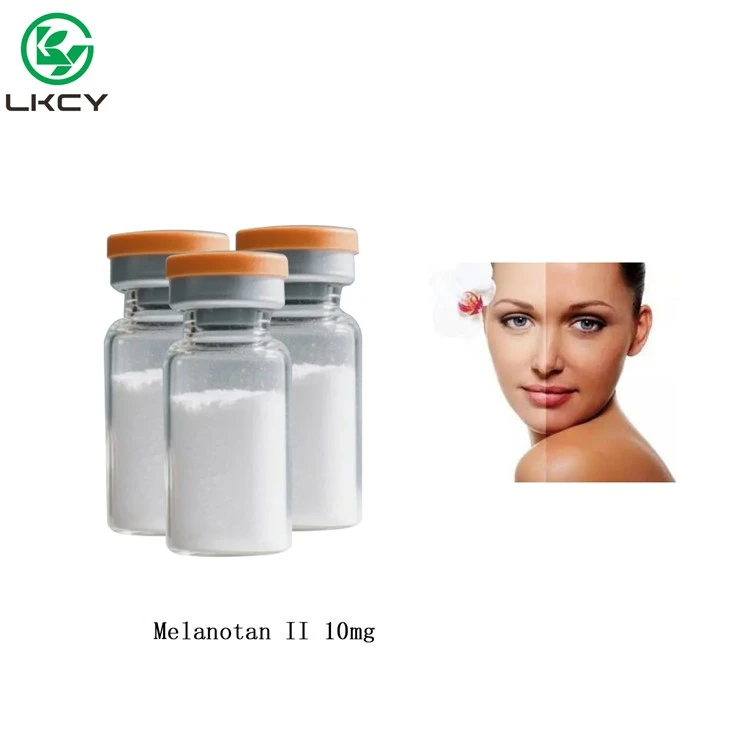
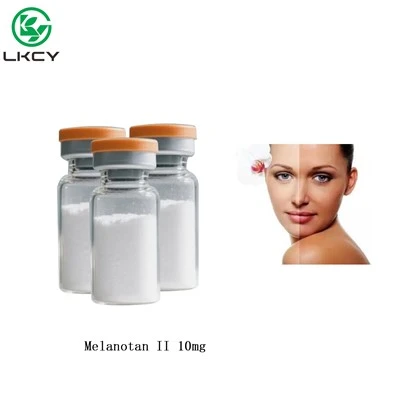
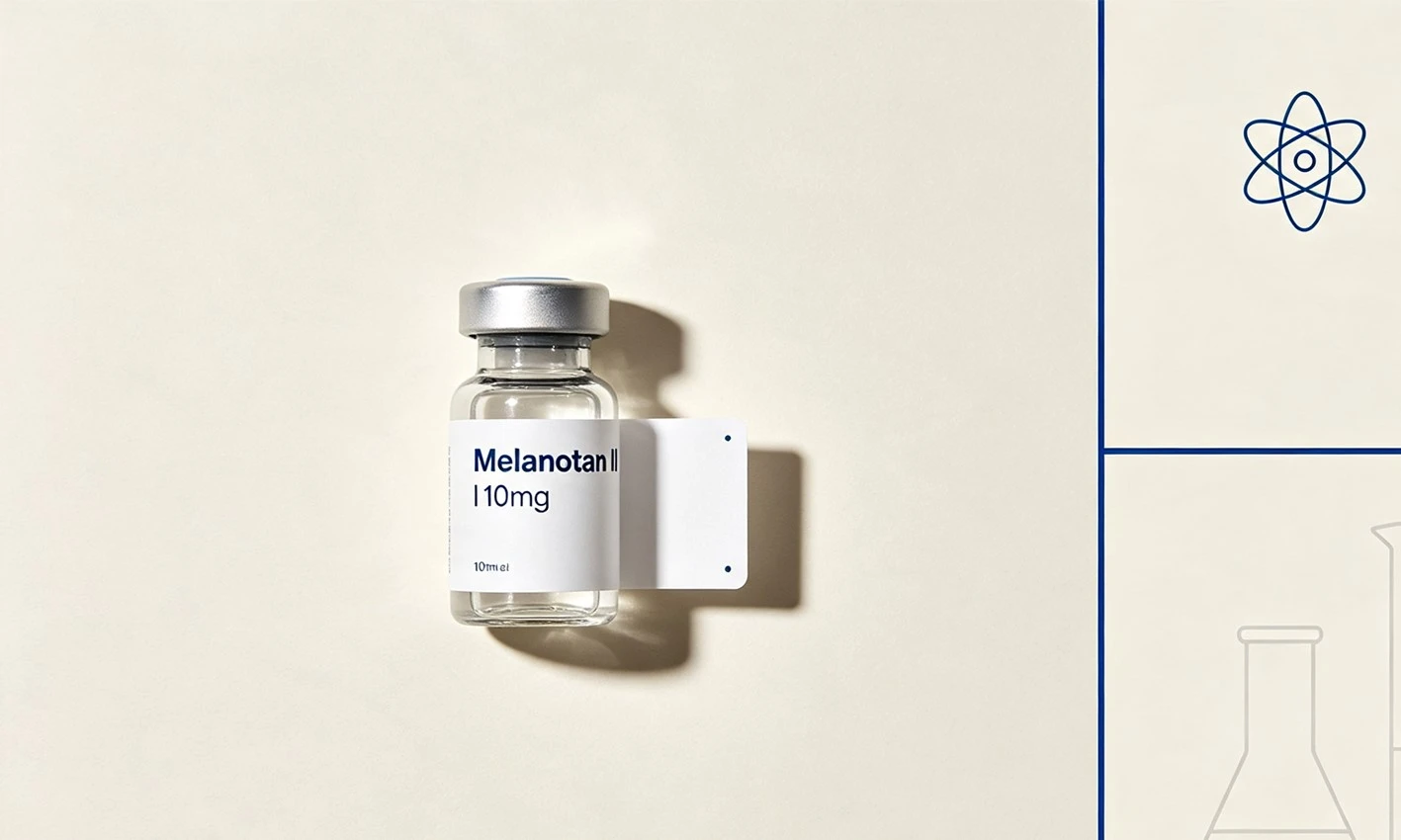
Melanotan II 10mg
Details
FROM:Lyophilized powder
packaging :BOX
CAS:121062-08-6
M.F:C50H69N15O9
MW:1024.18
Season:all
Specification:10mg/vials
Place of origin:shaanxi china
Main ingredient:Melanotan
MOQ:1BOX
Delivery time:about 3-5 days
(I) Main Peak Purity: ≥99.0% (Core Judgment Item)
Calculation Formula: MT2 Main Peak Integrated Area ÷ Total Area of All Peptide-Related Chromatographic Peaks × 100%.
Supply Control Details: The acceptable batch main peak purity range is 99.0%~99.8%; purity above 99.8% is extremely rare and often falsely labeled; purity below 99.0% is directly downgraded to Grade 98 raw material, failing to meet high-purity supply contract requirements.
Total impurity area ≤1.0%, and the area of a single unknown impurity peak ≤0.1%. This is the biggest difference between Grade 99 and Grade 98. Grade 98 raw material typically allows for a single impurity ≤0.2%, with more lenient impurity control, resulting in a higher proportion of trace missing amino acids and oxidized peptides, which can interfere with the reproducibility of cell experiment data.
The chromatogram baseline should be stable without any impurity peaks, and the baseline drift should be <1mAU; a chaotic baseline indicates the sample contains a large amount of trace degradation impurities, and even if the integrated value meets the standard, it does not meet the high-end supply standard.
(II) Retention Time Stability
Under the same chromatographic system, the standard retention time of the MT2 main peak fluctuates within ±0.2 min.
Batch supply requirements: Retention time RSD (relative standard deviation) of 3 parallel injections within the same batch ≤ 0.5%; retention time deviation between different production batches should not exceed 0.3 min. Significant deviations in retention time indicate two risks: incorrect raw material sequence or excessive residual synthetic byproducts, directly indicating unqualified raw materials.
(III) Known Process Impurity Limits (qualitatively distinguishable by HPLC chromatogram)
The MT2 solid-phase synthesis process generates three types of characteristic impurities, with fixed peak positions in the chromatogram. 99% high-purity raw materials have strict limits on each type of impurity:
Polar front-end impurities (eliminate earlier than the main peak): Depleted single-amino acid truncated peptides, incompletely deprotected fragments, and Fmoc hydrolysis byproducts, with a total proportion ≤ 0.4%. These impurities are highly polar and cannot compete with MT2 for melanin receptors, resulting in blank interference effects in in vitro and in vivo experiments.
Hydrophobic downstream impurities (eluting later than the main peak): MT2 dimer, oxidized tryptophan derivatives, and epimeric peptides, with a total percentage ≤0.5%. Dimer impurities increase cytotoxicity and are unsuitable for cell delivery and transdermal formulation development.
Co-eluting trace impurities: Shoulders or small protrusions adjacent to the main peak, with a total area <0.1%. The presence of obvious shoulders indicates insufficient purification steps, lack of preparative secondary HPLC purification, and a single crude fraction is insufficient to meet the 99-level supply standard.
(IV) Peak Purity Factor: High-end supply COA must include peak purity scan data, with a main peak purity factor ≥0.990. This indicator uses full-wavelength scanning to determine whether unseparated impurities are encapsulated within the main peak; a factor below 0.985 indicates the presence of isomers within the main peak. Even if the area calculation reaches 99%, the actual effective MT2 content is low, representing a loophole in industry testing. (V) Validation Data for Precision and Accuracy of Testing
For standard 99% high-purity raw materials, methodological validation data must be provided for each batch of testing. Foreign trade B2B clients and pharmaceutical companies will focus on verifying the following:
Repeatability: Six consecutive parallel injections, with a main peak purity RSD ≤ 0.3%. Large fluctuations indicate poor sample stability and substandard lyophilization process.
Recovery Rate: Spiked recovery rate of 99.0%~101.0%, proving no systematic bias in the integral calculation and no manipulation of the integral range to inflate purity.
(VI) Cross-validation Indicators for Multi-wavelength Chromatography
A single 220nm chromatogram is insufficient. For 99% grade suppliers, a 280nm chromatogram must also be provided: the total percentage of all impurity peaks at 280nm should also be ≤ 1%. If 220nm meets the standard but significant impurity peaks appear at 280nm, it indicates the presence of a large amount of tryptophan degradation impurities, and the raw material's storage stability is substandard.
IV. Mandatory Quality Control Items for 99% HPLC Purity (Complete Supply Standard, HPLC is only one core component)
In the industry's complete supply specifications, 99% HPLC purity only represents the chemical purity of the peptide. Complete and qualified MT2 raw materials must be accompanied by the following tests, all data attached to the Certificate of Account (COA), and none can be omitted:
Mass Spectrometry (ESI-MS) Identification
The measured molecular weight should have an error of ≤±1 Da compared to the theoretical value of 1024.18 Da. HPLC can only quantify purity and cannot confirm the molecular sequence. A 99% HPLC value without a mass spectrometry report has no legal validity and cannot be used for research applications or formulation registration.
Physicochemical and Moisture Indicators
Freeze-dried white powder; Karl Fischer moisture ≤0.5%; loss on drying ≤0.8%; excessive moisture will accelerate the hydrolysis and degradation of MT2 cyclic peptides, and impurities will continue to increase during long-term storage.
Residual Solvents (ICH Q3C Standard): Dichloromethane (DMC) ≤ 600 ppm, DMF (dimethylformamide) ≤ 880 ppm, TFA (trifluoroacetic acid) counterion content is indicated. Excessive residual solvents pose a risk of cytotoxicity.
Microorganisms and Endotoxins: High-purity cell/animal experimental grade MT2: bacterial endotoxin < 0.1 EU/mg; total bacterial count ≤ 100 CFU/g; molds and yeasts must not be detected; no pathogenic bacteria. Ordinary Grade 98 raw materials do not have mandatory endotoxin control.
Heavy Metal Impurities (ICH Q3D): Lead, arsenic, mercury, and cadmium individual limits are all below 1 ppm. Solid-phase synthetic resins and purification fillers easily introduce heavy metals; high-purity raw materials must undergo complete screening.
V. Industry Procurement Pitfalls: Common Mislabeling Methods and Spectrum Identification Techniques for 99% HPLC Purity
Shortening the elution gradient, impurities co-elute.
Compressing a 30-minute standard gradient to 10 minutes causes all impurities to overlap and merge into the main peak, resulting in a 1%-2% artificially inflated purity. Identification method: Check the COA mobile phase gradient program; reject samples with a total elution time below 25 minutes.
Intentionally enlarging the integration threshold to mask minute impurity peaks.
Modifying the minimum integration area in the detection software filters out trace impurity peaks below 0.05%, achieving paper purity standards, but trace degradation products are still present. Identification criteria: A qualified chromatogram has a clean baseline and no large number of truncated tiny spikes.
Mixing 95% crude peptides with high-purity peptides, only issuing a high-purity sample chromatogram.
Bulk shipments are low-purity materials; the COA includes a separately purified sample chromatogram. Reputable suppliers implement a batch-by-batch mapping (image) and batch-by-batch COA (Copy of Account), ensuring a complete correspondence between the chromatogram batch number and the material vial batch number. Suppliers can be requested to provide original injection data files for verification.
Confusing HPLC peptide purity with total material content: Some vendors advertise "99% content," but in reality, only the HPLC peptide purity is 99%, while the material contains over 10% TFA salt, and the effective MT2 dry matter is only 88%-90%. Purchase contracts must clearly state: RP-HPLC 220nm detection, target peptide main peak area ≥99.0% (total peptide impurities ≤1%), distinguishing peptide purity from total mass content.
VI. Application Boundaries of 99% HPLC MT2 Raw Material Supply
Suitable Scenarios: Quantitative pharmacology projects in universities, in vivo animal drug delivery experiments, transdermal drug formulations for medical aesthetics, high-sensitivity melanocyte binding experiments, third-party standardized reference standards;
Core Reasons for Not Recommending Low-Purity Substitutes: 1% unknown peptide impurities can alter cell signaling pathways, leading to unreproducible experimental data; impurities can bind to non-specific proteins, causing deviations in the drug-efficacy dose curve; long-term storage of formulations results in continuously increasing impurities and substandard product stability;
Warehousing and Supply Requirements: 99% high-purity MT2 should be packaged in uniform vacuum freeze-dried aluminum bottles, stored at -20℃ in a light-protected, sealed container. Stability testing data should be provided with the supply. After accelerated degradation at room temperature for 6 months, the HPLC purity should not decrease by more than 0.5% upon retesting.
Conclusion: 99% HPLC is not a single numerical indicator, but a complete supply system encompassing chromatographic hardware conditions, chromatographic quantitative parameters, impurity control, and comprehensive quality control. For MT2 peptide purchasers, determining whether raw materials truly meet industry high-purity standards cannot rely solely on the purity percentage on the report. They must verify complete original chromatograms, system suitability data, mass spectrometry authentication records, and corresponding solvent and endotoxin testing records. Only by fully implementing this testing standard can common industry losses such as experimental failures, formulation waste, and project data not being recognized by journals, resulting from falsely labeled raw materials, be avoided.
Shaanxi Lv Ke Chun Yuan Biotechnology Co., Ltd
Our address
Huaxia Yue World, Weibin District, Baoji City, Shaanxi Province
Phone Number
+86-13571783771
sales01@lucynatural.com