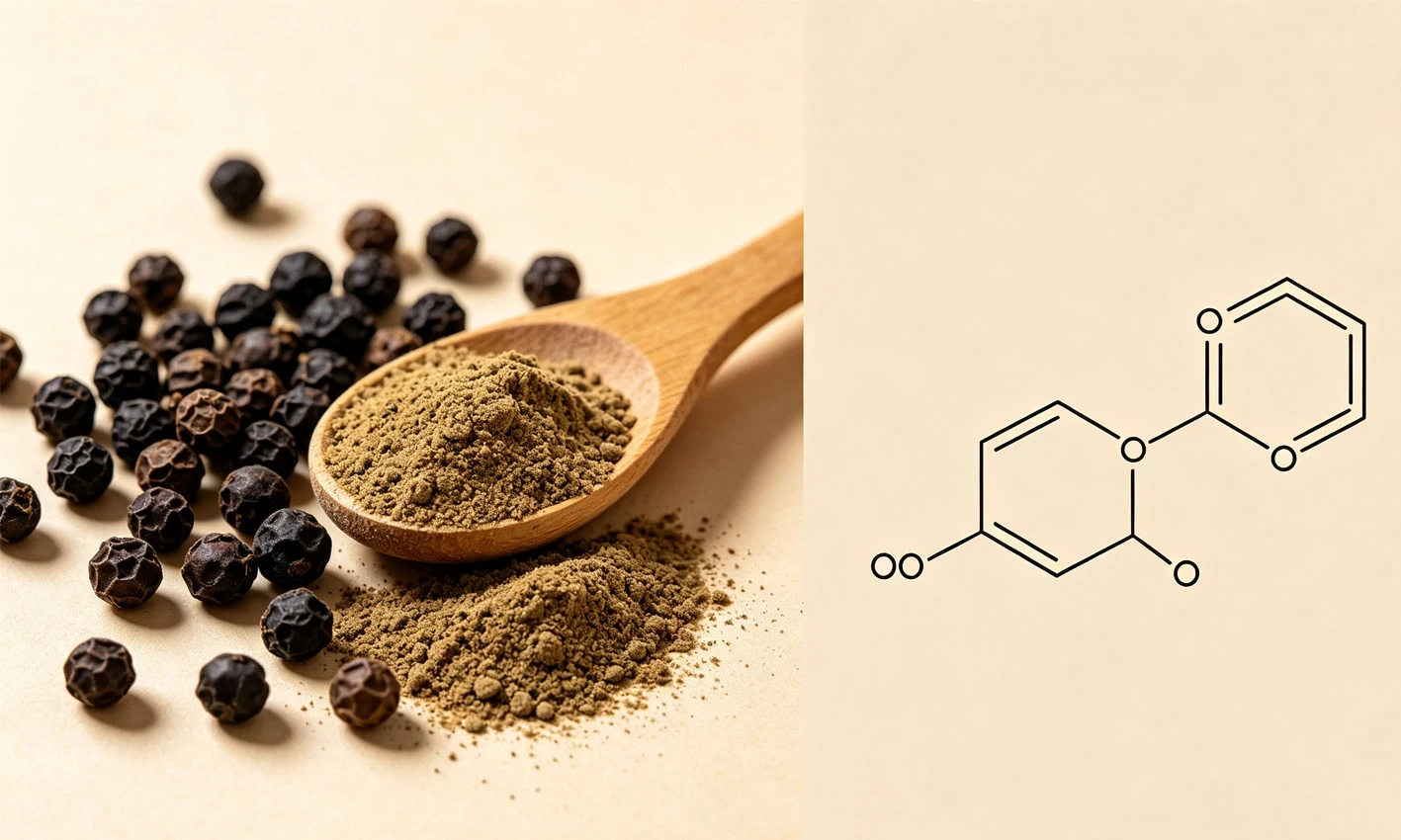
Piperine is the core active alkaloid found in the fruits of black and white pepper plants (Piper nigrum), belonging to the Piperaceae family. It is the main source of pepper's pungent flavor. Its chemical formula is C₁₇H₁₉NO₃. At room temperature, it appears as pale yellow needle-like crystals, is sparingly soluble in water, but readily soluble in organic solvents such as ethanol, acetone, and chloroform. It exhibits good thermal stability and diverse biological activities. As a natural plant functional component, piperine is widely used in food additives, functional health products, pharmaceuticals, and agricultural plant protection. Its efficient extraction, refined purification process optimization, and in-depth exploration of functional activities have always been key research directions and core industrialization topics in the natural products industry.
I. Mainstream Extraction Processes and Industry Application Characteristics of Piperine
Currently, the piperine extraction technology in the industry has formed a pattern of coexistence between traditional and new green processes. Different processes vary significantly in extraction yield, production cost, product safety, and industrial adaptability, and can be adapted to different scenarios such as laboratory research, small-scale pilot production, and large-scale industrial mass production.
1. Traditional Solvent Reflux Extraction Method
This is a classic and fundamental method for extracting piperine. It is technically mature, requires low equipment barriers, and is the mainstream choice for small and medium-sized production enterprises. The industry-standard raw material processing involves pulverizing dried peppercorns into 40-60 mesh powder, using 95% ethanol as the extraction solvent, controlling the solid-liquid ratio at approximately 1:10, and refluxing twice at 80℃, with each extraction lasting 2 hours. The extracts are then combined and concentrated under reduced pressure to remove the organic solvent, yielding crude piperine extract. This process is simple to operate and low in cost, but it has significant drawbacks: long extraction time, high risk of solvent residue, and the risk of slight loss of active ingredients due to prolonged high-temperature processing. The overall extraction yield is only 65%-75%, and the product has a relatively high impurity content, making it only suitable for low-end raw material processing scenarios.
2. Ultrasonic/Microwave Assisted Extraction Method
This is a modified assisted extraction process that introduces physical field enhancement to traditional solvent extraction. It is currently a commonly used technology for small and medium-scale refined production. Ultrasound can break down the cell walls of pepper plants through cavitation, accelerating the dissolution of piperine from within the cells; microwaves utilize electromagnetic fields to rapidly raise the temperature, shortening the extraction equilibrium time. The industry-optimized process parameters are: ultrasonic power 300-400W, extraction temperature 50-60℃, and extraction time 30-40min. Compared to the traditional reflux method, the extraction time is reduced by more than 70%, the yield is increased to 78%-85%, and the low-temperature treatment maximizes the preservation of piperine's bioactivity. This process has moderate energy consumption, no component damage, and balances efficiency and cost, making it suitable for the production of mid-range functional raw materials.
3. Supercritical CO₂ Extraction Method As a high-end green extraction process in the industry, this is the core technology for the production of high-purity, pharmaceutical-grade piperine. This process uses supercritical CO₂ as the extraction medium, eliminating the need for organic reagents and completely avoiding solvent residue problems. Industry-standardized experiments have verified that the optimal process parameters are an extraction pressure of 25 MPa, a temperature of 50℃, and a CO₂ flow rate of 20 L/h. Under these conditions, the piperine extraction yield can reach 88%-92%, and the purity of the crude extract can directly reach over 90%. This process operates at low temperatures, does not cause thermal degradation of components, and ensures high product safety, making it suitable for the pharmaceutical and high-end health product fields. However, it involves large equipment investment and high maintenance costs, limiting its application to large-scale, high-end industrial production.
4. Novel Green Eutectic Solvent Extraction Method
This is a popular innovative extraction technology in recent years, emphasizing environmental friendliness, high efficiency, and low cost. Utilizing a choline chloride-citric acid-propylene glycol composite eutectic system, combined with 25% pure water to prepare the extraction solvent, it can efficiently break down the cell wall structure of pepper, achieving a more selective extraction effect on piperine than traditional organic solvents. This process is free of volatile toxic solvents, is green and pollution-free, and the extracted product contains few polyphenol impurities and retains complete activity. Currently, laboratory process optimization has been completed, and it is gradually being transferred to industrial pilot production, representing a key development direction for green production in the future industry.
II. Core Technologies for Refined Purification of Piperine
The crude piperine extract obtained after extraction contains a large number of impurities such as pepper oil, polyphenols, and sugars, with a purity generally between 60% and 90%, which cannot meet the application standards in the pharmaceutical and high-end food fields. Further purification is required. The mainstream purification technologies in the industry are divided into two categories: physical purification and resin adsorption purification.
1. Acid-Base Adjustment Precipitation Method
This is a low-cost primary purification process suitable for preliminary impurity removal from crude extracts. The pH of the crude piperine ethanol extract is adjusted to 4.0 with 6 mol/L hydrochloric acid and allowed to stand at room temperature for 4 hours. Taking advantage of the reduced solubility of piperine in acidic systems, crystals precipitate out. After filtration to remove water-soluble acidic impurities and sugar impurities, the extract is redissolved in ethanol, washed with water, concentrated, and dried, which can increase the purity of piperine to over 85%. This process is simple to operate and extremely low in cost, but the impurity removal precision is limited, and it is only used as a pretreatment step.
2. Macroporous Adsorption Resin Purification Method
This is currently the mainstream purification process for industrial mass production, balancing purification precision and production efficiency. The industry mainstream choice is HPD722 macroporous adsorption resin, which has a specific adsorption capacity for piperine and extremely low impurity adsorption. Standardized process parameters are: piperine concentration in the loading solution 2.6 mg/mL, loading flow rate 3 mL/min, and elution solvent 70% ethanol. After dynamic adsorption and elution, the purity of piperine can be increased to over 95%, and the resin can be repeatedly regenerated and reused. Production costs are controllable, suitable for large-scale continuous production, and it is the core purification process for food-grade and health product-grade piperine.
3. Recrystallization Purification Method: This is a high-end refining and purification process used to prepare high-purity piperine of over 98%. An ethanol-water composite recrystallization system is used. 95% pure crude piperine is dissolved in hot anhydrous ethanol, and pure water is slowly added dropwise to adjust the solvent polarity. Crystallization is carried out at low temperature, and trace amounts of lipid-soluble and water-soluble impurities are gradually removed through multiple recrystallizations. This process achieves high purification precision, yielding 98%-99% chromatographically pure piperine, meeting the application requirements of pharmaceutical preparations, scientific research experiments, and high-end reagents. Its disadvantages include a long purification cycle and slightly higher product loss, making it suitable only for small-batch production of high-end products.
4. Column Chromatography Purification Method
This is a laboratory-level ultra-high purity purification technique. Using silica gel or alumina columns as separation media, gradient elution achieves complete separation of piperine from trace homologous impurities. The purified product purity can reach over 99.5%. It is mainly used for pharmacological research and standard preparation, and is not suitable for large-scale industrial production.
III. Core Functional Activities and Industry Research Progress of Piperine
Recent pharmacological and applied studies have confirmed that piperine possesses multiple natural biological activities with high safety and clear targets. The development of its functional activities has expanded from traditional food flavoring to multiple fields such as pharmaceutical treatment, health intervention, and agricultural plant protection.
1. Enhanced Bioavailability Activity
This is the core characteristic of piperine with the greatest industrial value. Piperine can effectively reduce the metabolic clearance rate of functional ingredients and drugs by inhibiting glucuronyl transferase and P-glycoprotein efflux pump activity in the intestine and liver. Clinical trial data show that piperine can increase the oral bioavailability of curcumin by 2000%, and significantly improve the in vivo absorption efficiency of quercetin, various antibiotics, and analgesics. It is one of the best bioavailability enhancers among natural products and is widely used in the formulation optimization of compound health products and oral preparations.
2. Anti-inflammatory and Antioxidant Activity
Piperine can inhibit the release of inflammatory factors TNF-α and IL-6 in the body, block the transmission of inflammatory signaling pathways, and has a good intervention effect on chronic low-grade inflammation. It can also scavenge free radicals in the body, enhance the activity of antioxidant enzymes, and reduce oxidative stress damage to cells. It is widely used in anti-aging and metabolic syndrome intervention health products, and related formulations have been commercialized. 3. Antitumor and Pharmacological Activity: Numerous in vitro cell experiments and animal model studies have confirmed that piperine can significantly inhibit various tumor cells, including lung cancer, liver cancer, and breast cancer, by inducing tumor cell apoptosis and inhibiting tumor cell proliferation and metastasis, while exhibiting extremely low toxicity to normal cells. Simultaneously, piperine is a broad-spectrum anticonvulsant, antagonizing seizures induced by various factors, showing good potential in the development of adjuvant drugs for epilepsy. Currently, research on its related pharmacological mechanisms is maturing and progressing towards the new drug development stage.
4. Antibacterial and Agricultural Bioactivity: Piperine has significant inhibitory effects on various drug-resistant pathogens and fungi, such as *Pseudomonas aeruginosa*, *Vibrio cholerae*, and *Candida albicans*, and can disrupt microbial biofilm formation, possessing natural antibacterial and preservative effects. Furthermore, it has toxic activity against agricultural pests such as *Aedes aegypti* and *Cornus asiaticus*, achieving insecticidal effects by interfering with the chitin metabolism of pests, making it a high-quality raw material for green biological pesticides and natural food preservatives.
IV. Current Status and Trends of the Piperine Industry
The domestic piperine industry has formed a complete industrial chain encompassing raw material processing, extraction and purification, and end-use applications, with products covering multiple grades including industrial, food, health supplement, and pharmaceutical. With the popularization of natural, healthy, and green production concepts, the industry is showing two core trends: First, the green upgrading of extraction and purification processes. Traditional high-solvent-residue, high-energy-consumption processes are gradually being replaced by green processes such as supercritical fluid extraction and eutectic solvent extraction, continuously improving the environmental friendliness of the production process and the safety of the products. Second, the refined expansion of functional applications. The industry is shifting from simply providing piperine raw materials to developing end-use products based on its biosynergistic, anti-inflammatory, and anti-tumor activities. Sub-sectors such as compound functional health products, natural antibacterial agents, and biopesticides are developing rapidly.
Meanwhile, the industry still faces certain development challenges, including concentrated high-end, high-purity piperine production capacity, insufficient refined purification technology among small and medium-sized enterprises, and a low degree of industrialization of functional activities. Future technological research and development will focus on optimizing low-cost green purification processes, developing compound functional formulations, and clinically validating pharmacological efficacy to further unlock the industrial value of piperine.
Shaanxi Lvke Chunyuan Biotechnology Co., Ltd.
Our address
Huaxia Yue World, Weibin District, Baoji City, Shaanxi Province,china
Phone Number
86-13992760792( Grace liu Sales manager )