Against the backdrop of surging global demand for Ashwagandha (Withania somnifera), adulteration risks throughout its supply chain have sparked widespread industry concern. On April 15, 2026, the Government of India issued a mandatory regulatory order, explicitly prohibiting the use of Ashwagandha leaves and aerial parts in Ayurvedic formulations. Only roots and root extracts are approved for oral consumption products. This ban on specific plant part usage marks a transition from industry advisory guidelines to strict law enforcement, putting the authenticity of botanical raw material parts under rigorous oversight.
As a core adaptogen in traditional Ayurvedic medicine, Ashwagandha has been widely adopted across the modern wellness sector. Ashwagandha root extracts deliver prominent efficacy in stress management, sleep improvement, cognitive support, sports nutrition and healthy aging, maintaining robust growth across North America, Europe, the Asia-Pacific region and emerging markets. It has long ranked among the leading botanical ingredients in the U.S. stress management category, fully reflecting its evolution from a traditional medicinal herb to a mainstream wellness raw material.
Nevertheless, rapid market expansion has exposed structural deficiencies in the raw material procurement system. To pursue higher profit margins, some suppliers replace or blend genuine root materials with low-cost Ashwagandha aerial parts (leaves and stems). While such practices yield short-term gains, they trigger fluctuations in active constituents, which in turn pose risks to product consistency, safety and label authenticity. It is well acknowledged that the chemical differences between Ashwagandha roots and aerial parts are not merely based on traditional experience, but constitute a vital pharmacological distinction.
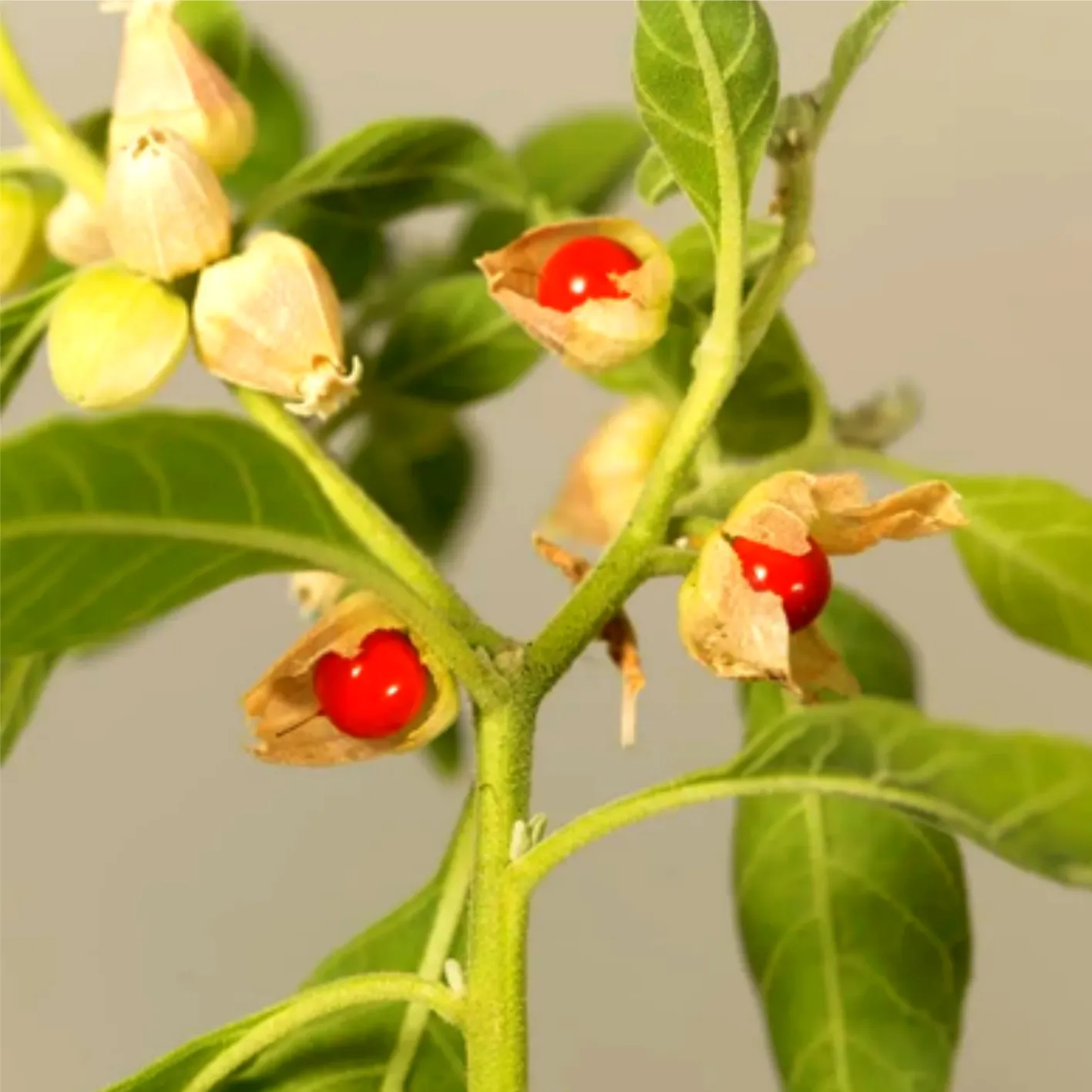
For centuries, the Ayurvedic practice has limited oral administration of Ashwagandha exclusively to its roots, and this empirical standard has now been validated by modern scientific research. From a phytochemical perspective, leaves contain significantly higher levels of Withanolide A than roots. This compound has demonstrated definite cytotoxic and pro-apoptotic properties in multiple in vitro and animal studies. In contrast, root-based formulations feature a more stable chemical profile with controllable exposure levels and toxicological risks. Their safety has also undergone systematic verification in numerous human clinical trials, forming the scientific rationale for current mainstream applications.
In terms of regulation, India's Ministry of Ayurveda, Yoga & Naturopathy, Unani, Siddha and Homoeopathy (AYUSH) released guidance in 2021, clarifying that only Ashwagandha roots are permitted for oral use and officially endorsing the principle of part-specific application. This regulatory stance echoes the continuous attention paid by the American Botanical Council (ABC) to botanical part substitution and its potential safety hazards.
The severity of Ashwagandha adulteration has been quantitatively verified by multiple analytical studies. Researchers generally adopt chromatographic fingerprinting techniques including High-Performance Liquid Chromatography (HPLC) and High-Performance Thin-Layer Chromatography (HPTLC). Flavonol glycosides - the unique chemical markers of aerial parts - are used as core indicators to trace and authenticate raw materials labelled as "root-derived".
One HPLC-UV analysis on commercial samples sourced from India and Egypt showed that among 10 products claimed to be root extracts, only 2 tested negative for aerial part markers, while the other 8 returned positive results, indicating an adulteration rate of up to 80%. This proves that substituting roots with leaves is a highly prevalent issue. Another large-scale HPTLC study covering 584 batches of commercial extracts found 14.0% of samples contained detectable leaf residues, and 20.4% used impure raw materials that were not pure roots.
According to 2024–2025 statistics from India's National Medicinal Plants Board (NMPB), sales volume of Ashwagandha leaves reached 4,698 metric tons, surpassing root sales of 4,170 metric tons. However, this large volume of leaf transactions is not reflected in official export data, revealing obvious discrepancies in trade statistics and opaque product distribution flows.
Therefore, without routine, standardized analytical testing capable of differentiating plant parts (e.g., chromatographic fingerprinting based on characteristic chemical markers), any default assumption regarding botanical part authenticity is unacceptable both scientifically and regulatorily. Instead, verification of part authenticity via laboratory testing shall be established as a fundamental quality control principle for such botanical extracts.
Indian regulatory authorities have taken prompt action to address the crisis. On April 15, 2026, the Ministry of AYUSH issued Circular No. T-13020/4/2022-DCC-Part (2), stipulating that only Ashwagandha roots may be used in Ayurvedic formulations, and requiring manufacturers to clearly mark the applied plant part on product labels. On the following day, the Food Safety and Standards Authority of India (FSSAI) released Notification F.No. RCD-15001/11/2021-Regulatory-FSSAI, extending the ban to foods and nutritional supplements, and instructing law enforcement agencies to crack down on violations. Given India's pivotal role in the global Ashwagandha supply chain, these regulatory measures are bound to reshape international procurement standards.
The industry's response framework has become clear: the analytical verification system must be upgraded from periodic random sampling to full-chain, routine quality control. HPLC and HPTLC, proven reliable for distinguishing plant parts, should be embedded into key links including raw material procurement, in-process production control and third-party testing, to realize end-to-end quality monitoring.
Meanwhile, label claims, supply chain documents and Certificates of Analysis (COA) must be further optimized for transparency and consistency, to ensure full alignment between information flow and physical goods flow and avoid misleading labelling and untraceable raw material sources. Several forward-looking enterprises have achieved full lifecycle control from cultivation to finished goods through vertically integrated supply chain management and standardized extraction processes, creating a replicable model for consistent product quality and enhanced consumer trust.
Ashwagandha's functional value in the modern wellness industry is undisputed, yet the core challenge for the sector has shifted from efficacy recognition to supply chain integrity. Regulators, scientific institutions and compliant enterprises have reached growing consensus, and relevant analytical tools and governance mechanisms are now largely in place.
The key priority for the next phase is no longer technical feasibility, but sustained execution: every product labelled as "root-sourced Ashwagandha" must be backed by verifiable proof of genuine root origin. In the long run, the industry's development prospects depend not only on market expansion, but also on the sector's institutional adherence to quality bottom lines and strict enforcement of compliance rules.
Statement: This article is sourced from the "China Plant Extracts Technical and Trade Measures Evaluation Base". The copyright belongs to the original author. Reprinting is only for the purpose of spreading positive energy in the plant extracts industry.